Alpha3D
Cloud image and text to 3D with a mandatory cleanup pass, three polygon density tiers and quad output from the Basic plan upward.
AI 3D model generator that turns text prompts or images into textured, riggable meshes in about a minute.
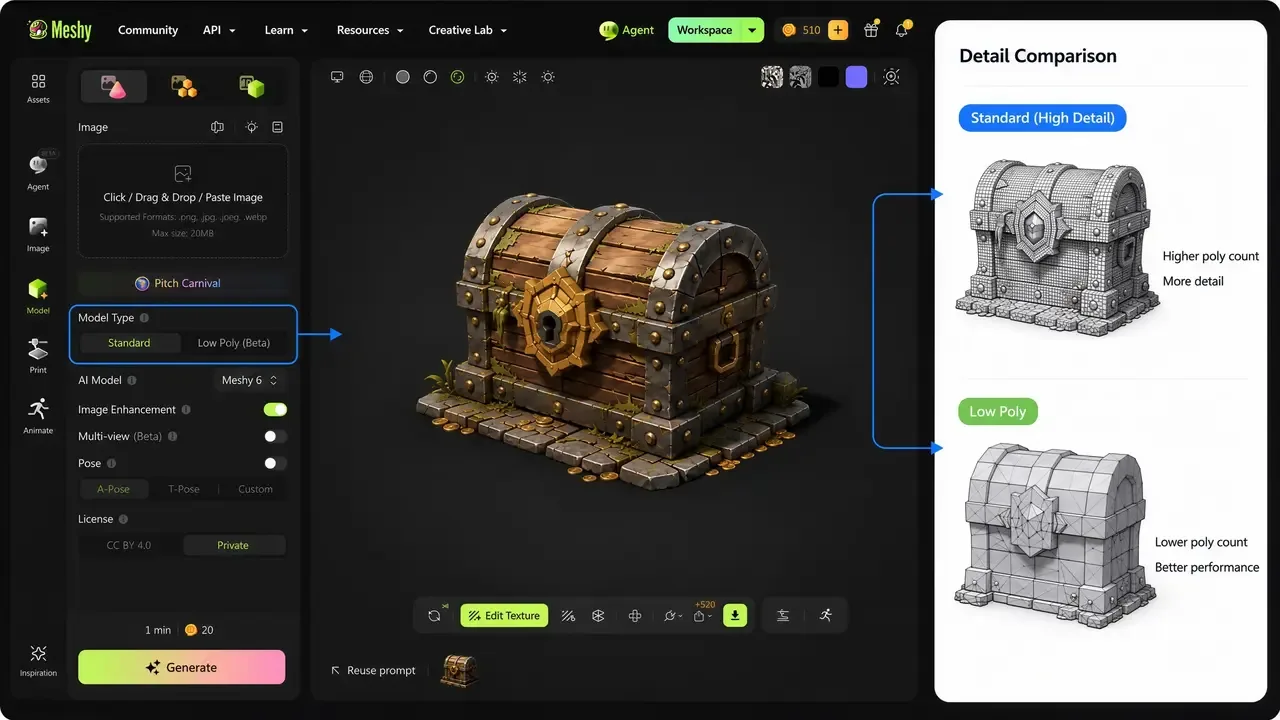
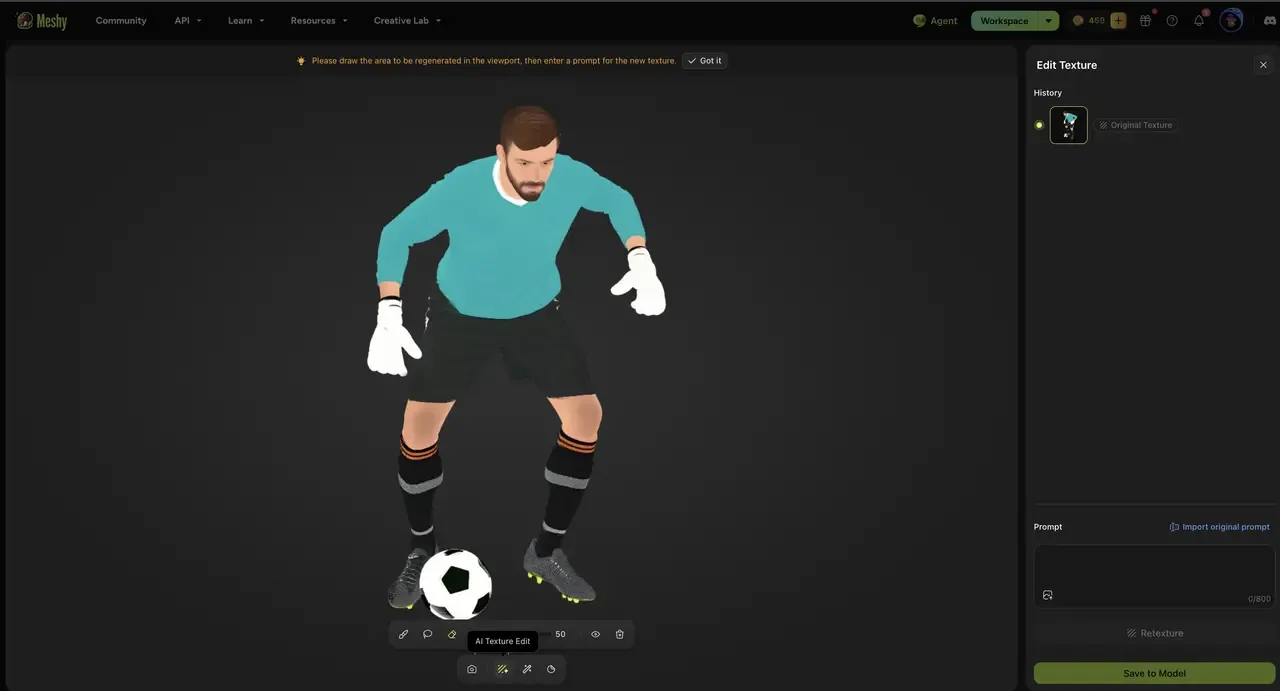
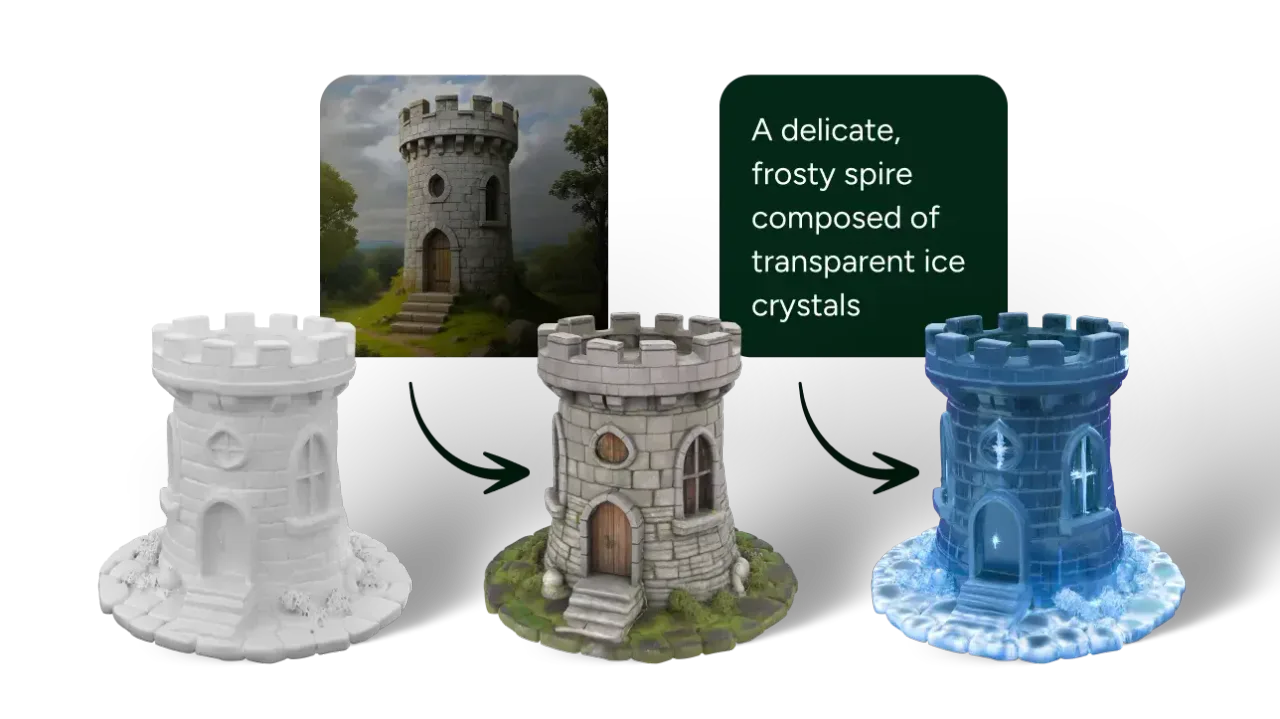
Meshy is a browser based generative AI tool that creates 3D models from text prompts, single images or multi view image sets. It is built by a Silicon Valley company founded in 2021 whose team came out of the Taichi high performance graphics project, and it outputs textured and optionally rigged meshes in roughly a minute. In a pipeline it fits the early blocking, prototyping and asset population stages rather than replacing hand modeling, and it runs entirely in the browser with no local GPU. The current model generation is Meshy-6, released in January 2026.
Generate a mesh from a written prompt or a single image. The image path extrapolates depth to infer surfaces the photo does not show, which suits turning concept art into a 3D proxy.
Feed up to four reference photos such as front, back and side, and the model fuses them to preserve asymmetric detail and reduce the guessed geometry that single image generation invents.
Generates full PBR texture sets (albedo, normal, metallic, roughness, ambient occlusion) up to 4K. Traditional artists also upload their own untextured OBJ or FBX to texture it from a prompt, skipping manual UV work.
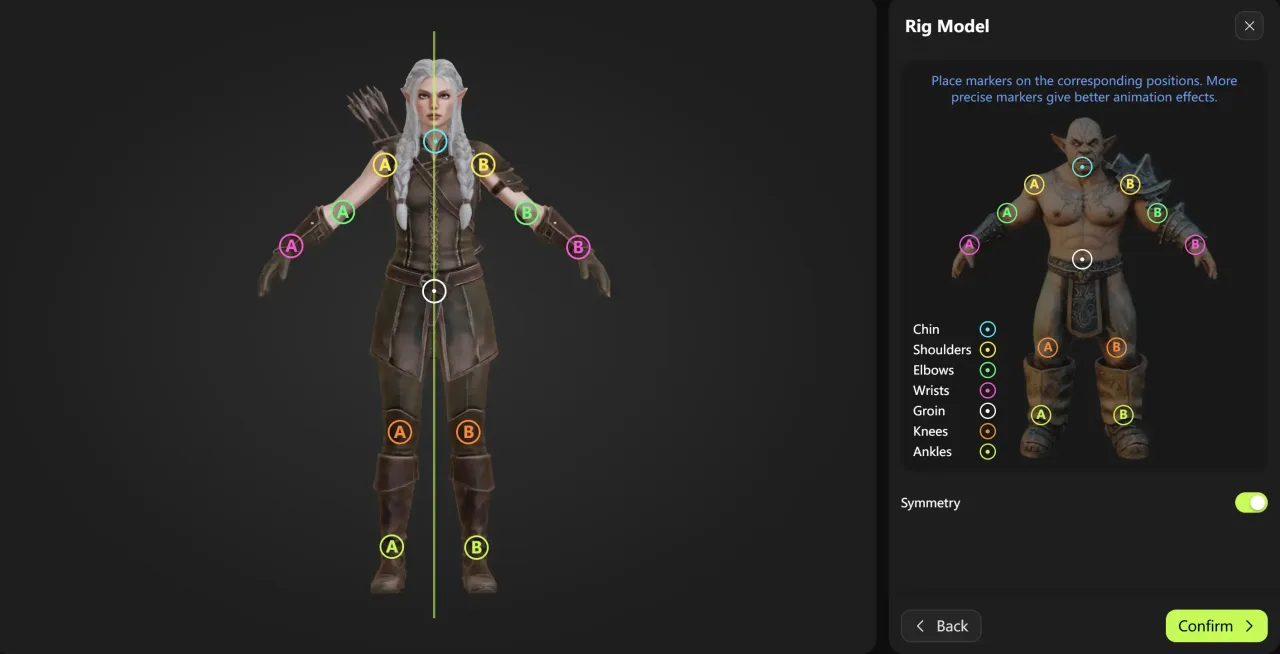
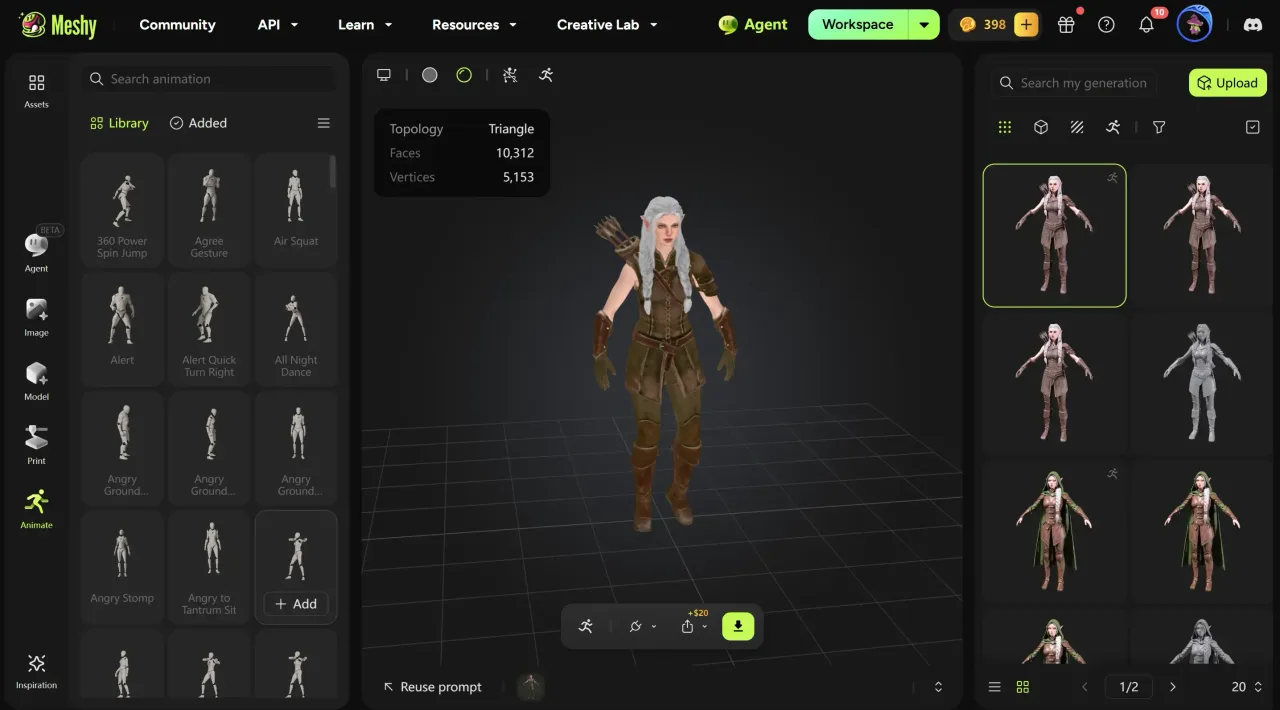
A built in auto-rigger trained on humanoid and quadruped shapes lets you apply hundreds of preset animations in the browser and export the skeleton as FBX. Custom mechanical rigs still need manual setup.
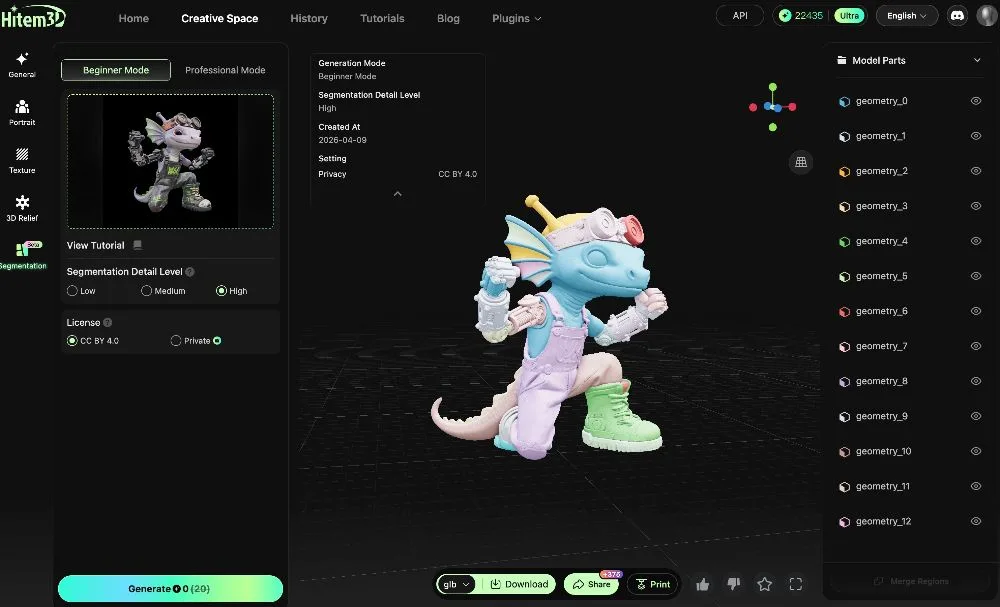
Printability analysis flags non-manifold edges and open boundaries, and the Auto Split feature slices a model into separate printable parts, caps the cuts watertight and lays them out for slicers like OrcaSlicer.
A REST API plus official plugins for Blender, Unity, Unreal Engine, Maya, 3ds Max, Godot and Roblox Studio move generated assets into existing pipelines without manual re-importing.
Recurring themes across third-party user reviews (G2, Capterra, TrustRadius).


Meshy is free to start. There is a free tier you can use indefinitely, and paid plans begin at USD 20/month.
| Plan | Price | What you get |
|---|---|---|
| Free | USD 0 | 100 credits per month. Outputs are under a CC BY 4.0 license, so commercial use requires attribution. No API access. |
| Pro | USD 20/month | USD 240 billed yearly. 1,000 monthly credits, unlimited downloads, API access, and private ownership with royalty free commercial rights. |
| Studio | USD 60/seat/month | Team plan (minimum two seats) with pooled credits, centralized billing and team collaboration features. |
| Enterprise | Custom | Custom credit allocation, SAML/SSO, dedicated support and extended API retention. |
Fast way to populate levels with background props and low poly NPCs, with direct Unity and Unreal plugins for engine blocking.
Turns 2D character art into printable miniatures, and Auto Split plus printability repair prepare a model for the print bed.
Translates 2D concept art into rough 3D proxies quickly, which suits storyboarding and blocking out scene composition.
Removes the blank canvas bottleneck by producing a textured starting mesh in under a minute to iterate on.
Generated topology is not the deliberate quad-dominant edge flow that facial rigs and precise deformation need, so hero assets still require heavy manual retopology.
There is no CAD logic: it cannot read parametric dimensions, tolerances or BIM data, and it does not replace tools like AutoCAD, Revit or Rhino.
Monthly credits expire and do not roll over, so people who need a model only now and then find the subscription economics inefficient versus pay per use options.
It depends on the plan. Free tier outputs are under a CC BY 4.0 license, which allows commercial use but requires public attribution. All paid tiers (Pro, Studio, Enterprise) grant private ownership and royalty free commercial rights with no attribution.
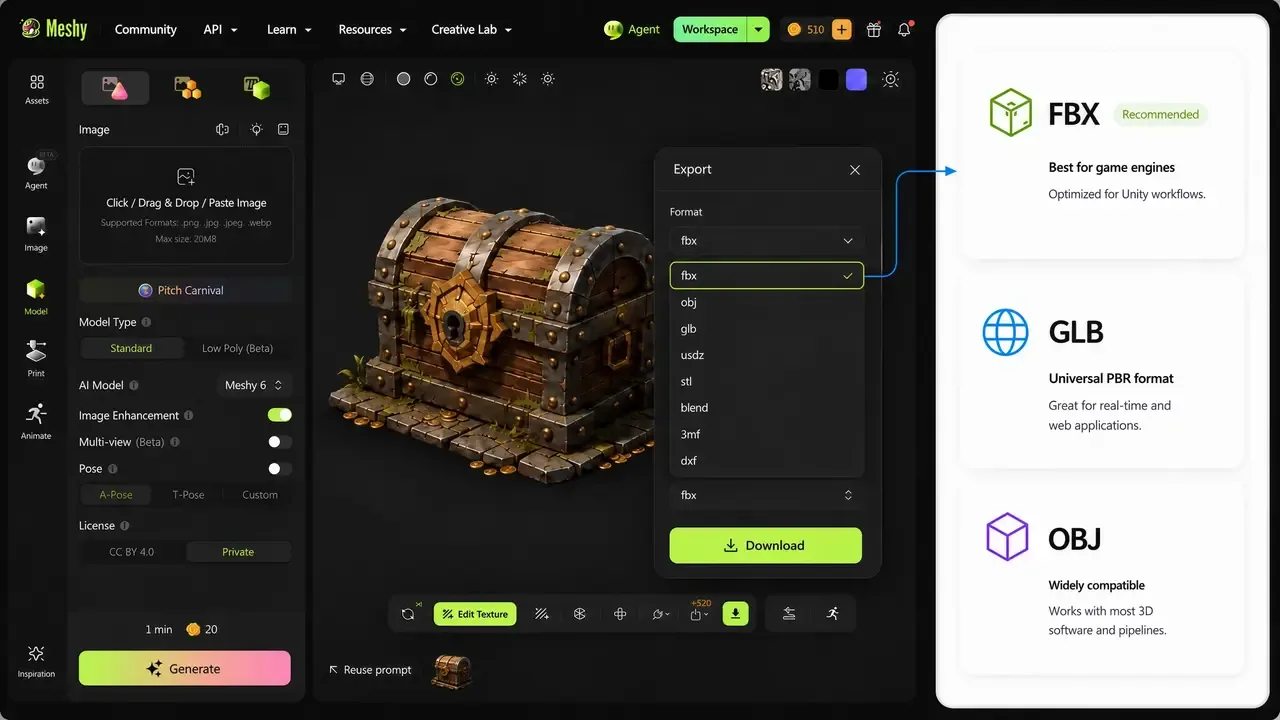
Usually because of the export format. STL is geometry only and carries no color, and OBJ stores textures as separate files that break if the folder structure changes. Export as GLB for Unity and web or FBX for Unreal, since both embed the PBR textures in the file.
No. Credits reset each month and do not accumulate. Because AI generation is iterative and some attempts fail, heavy users often buy extra credit packs, which raises the real cost per finished asset.
Not natively. Generative AI struggles with articulated mechanical logic such as functional hinges. The recommended workaround is to generate each component separately and assemble them manually in a tool like Blender.
The current model generation is Meshy-6, which reached full commercial release in January 2026 after a preview in late 2025.
Cloud image and text to 3D with a mandatory cleanup pass, three polygon density tiers and quad output from the Basic plan upward.
Image, sketch and text to 3D generator. Alphabet acquired the company in January 2026 and the service is no longer reachable.
Image and text to 3D built around printing: watertight output, face counts up to 2 million, and 3MF export that carries colour regions into a slicer.
Tencent's AI 3D generator with open weights for self hosting and a commercial cloud API, strongest on hard surface geometry.
Managed 2D to 3D asset production for studios, where AI generates the base mesh and in-house artists retopologise it before delivery.
Text, image and sketch to 3D generator with a free tier, mesh quality presets, part splitting and export aimed at both game engines and 3D printing.