Alpha3D
Cloud image and text to 3D with a mandatory cleanup pass, three polygon density tiers and quad output from the Basic plan upward.
Tencent's AI 3D generator with open weights for self hosting and a commercial cloud API, strongest on hard surface geometry.
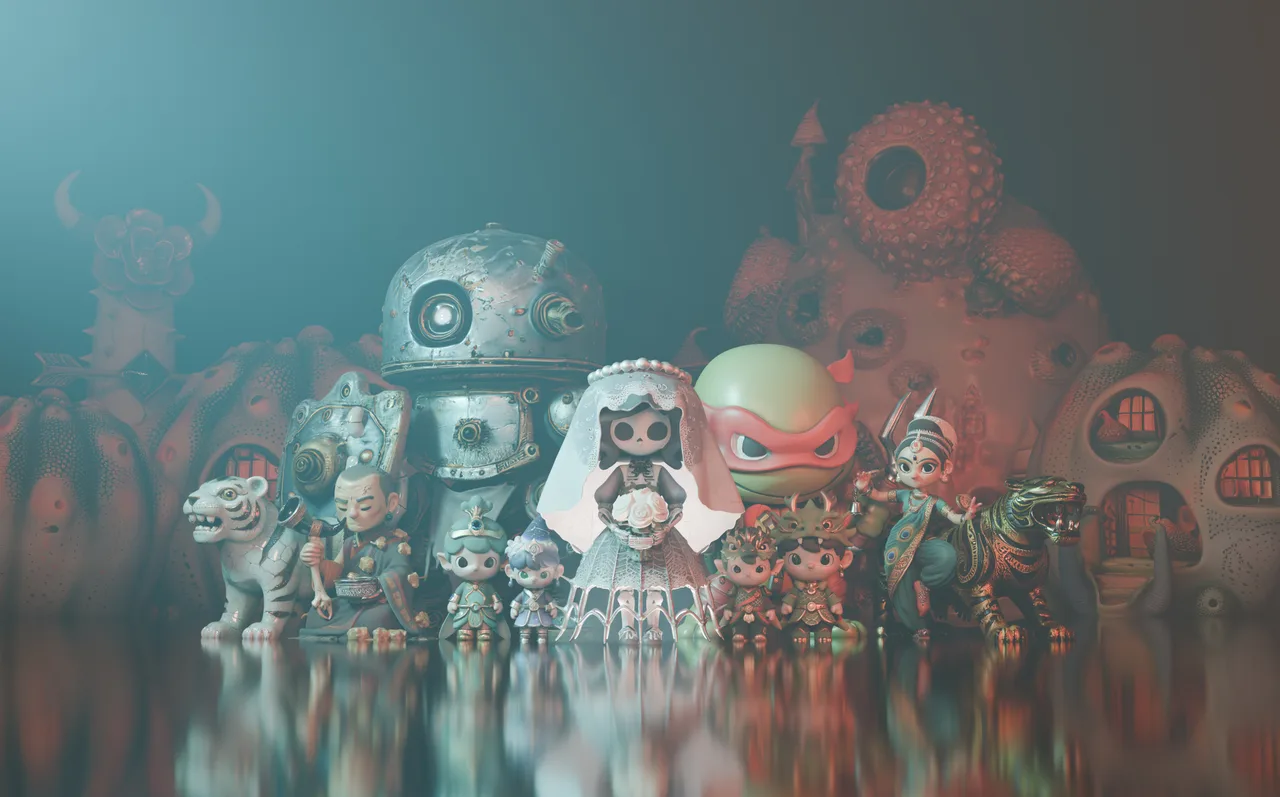
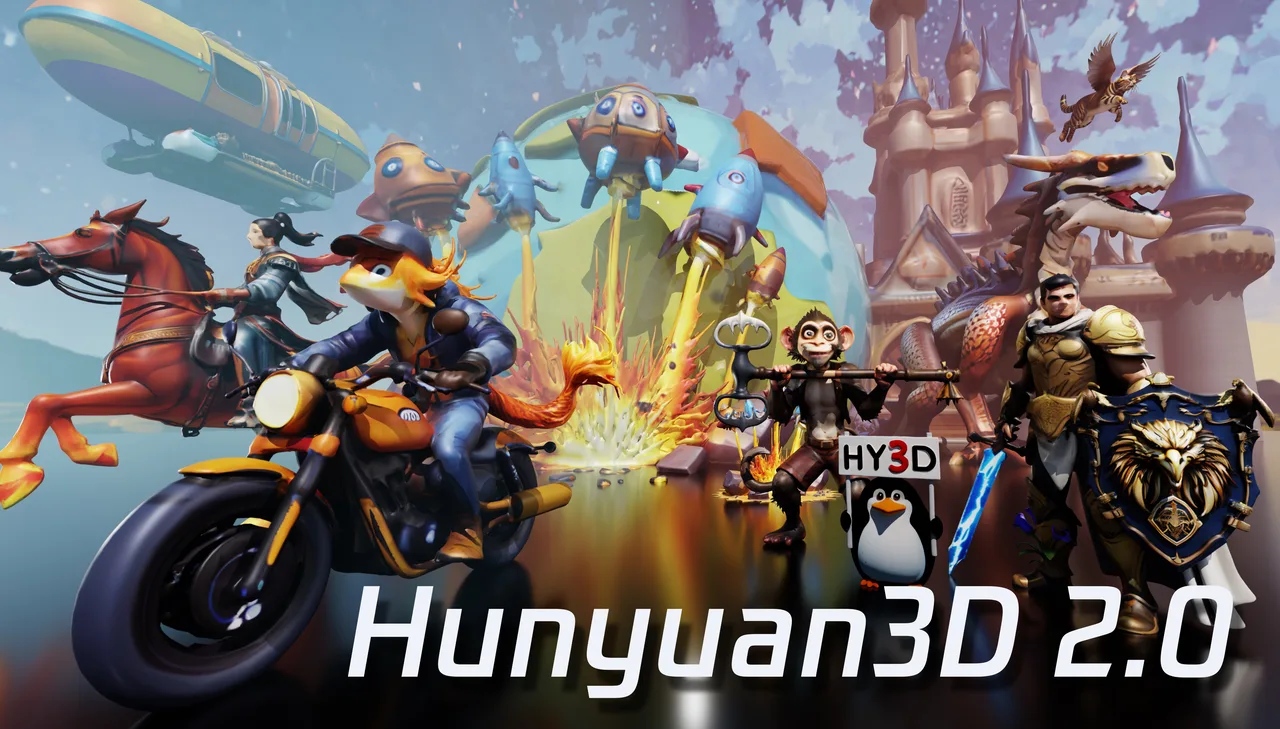
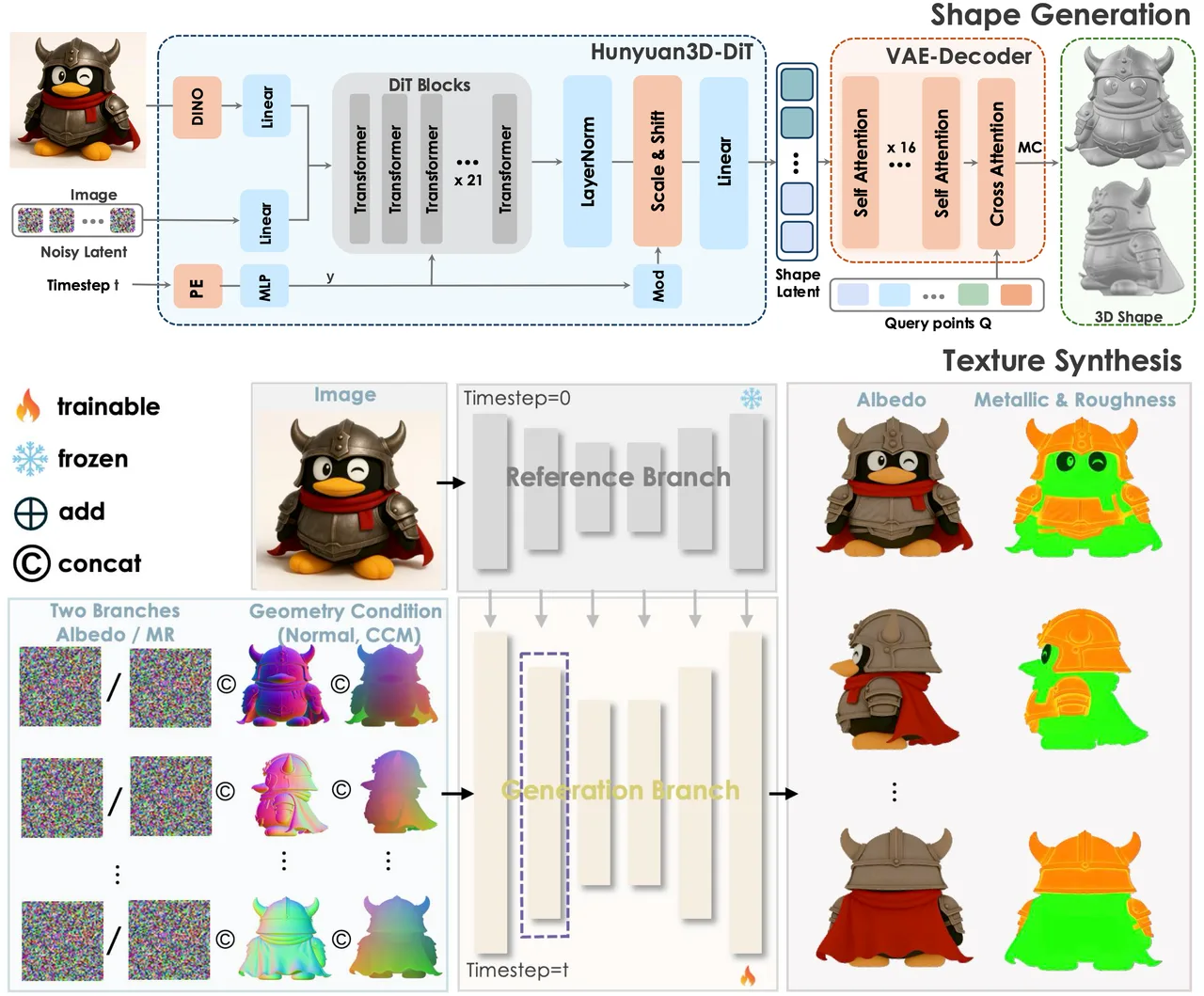
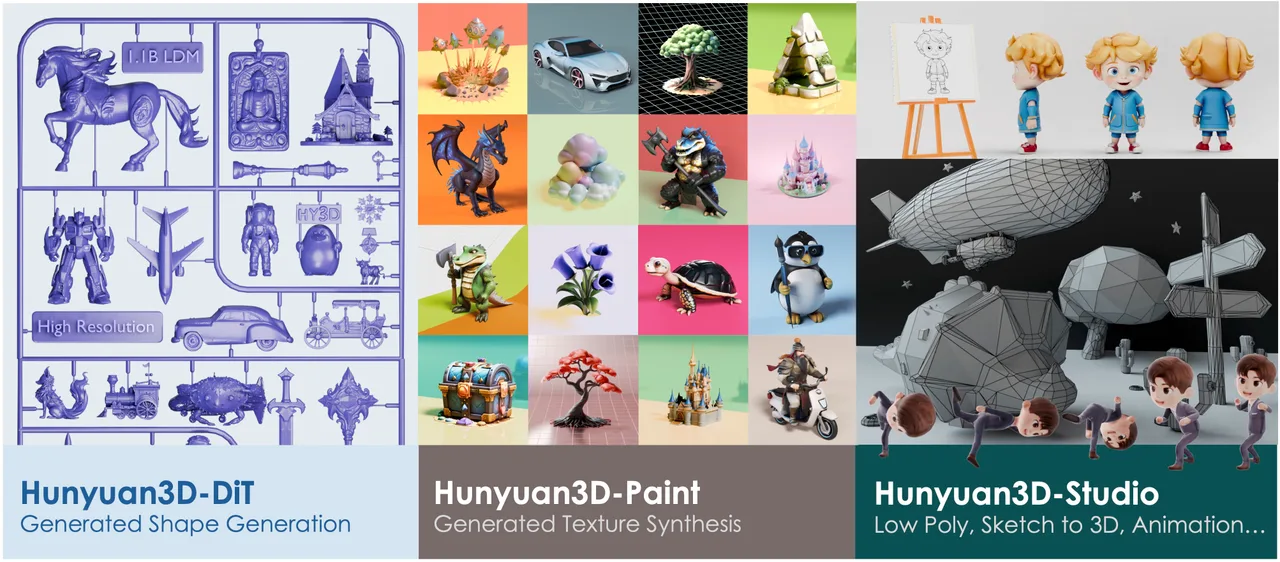
Hunyuan3D is Tencent's generative 3D family, run on a deliberately split model: the 2.0 and 2.1 generations are published with full weights and training code for self hosting, while the newest engines (2.5, 3.0 and 3.1, plus the PolyGen topology optimizer) stay closed behind the Tencent Cloud API. Generation is two stage, a flow based diffusion transformer builds the shape and a separate Paint model synthesises PBR textures, and its standout strength versus rivals is hard surface work: flat planes, symmetry and clean seams between parts. Tencent launched the 3D engine globally in November 2025, citing more than 150 enterprise customers including Unity China and Bambu Lab. The open weights come with real strings attached though: the community license excludes the EU, UK and South Korea, caps free commercial use at one million monthly active users, and forbids using outputs to train competing models.
A flow based diffusion transformer generates geometry, then the separate Hunyuan3D-Paint model synthesises albedo, roughness, metallic and normal maps. Because the stages are decoupled, Paint can also texture meshes you modeled yourself.
Its distinctive strength in head to head tests: flatter flat surfaces, better symmetry and cleanly defined seams between sub objects than rivals, which makes mechanical and architectural generations far easier to post process.
The 2.1 release ships a 3.3 billion parameter shape model, texture model and training code. Teams run it locally or in ComfyUI for full data privacy and zero per generation cost, within the community license terms.
The commercial 3.1 API accepts up to eight views of an object (front, back, sides, top and corners), sharply reducing the guessed geometry that single image generation invents on unseen surfaces.
The closed 3.0 and 3.1 engines run 10 billion plus parameter models with 4K and 8K texture output and watertight meshes aimed at 3D printing; self hosted texture resolution is bounded by your VRAM.
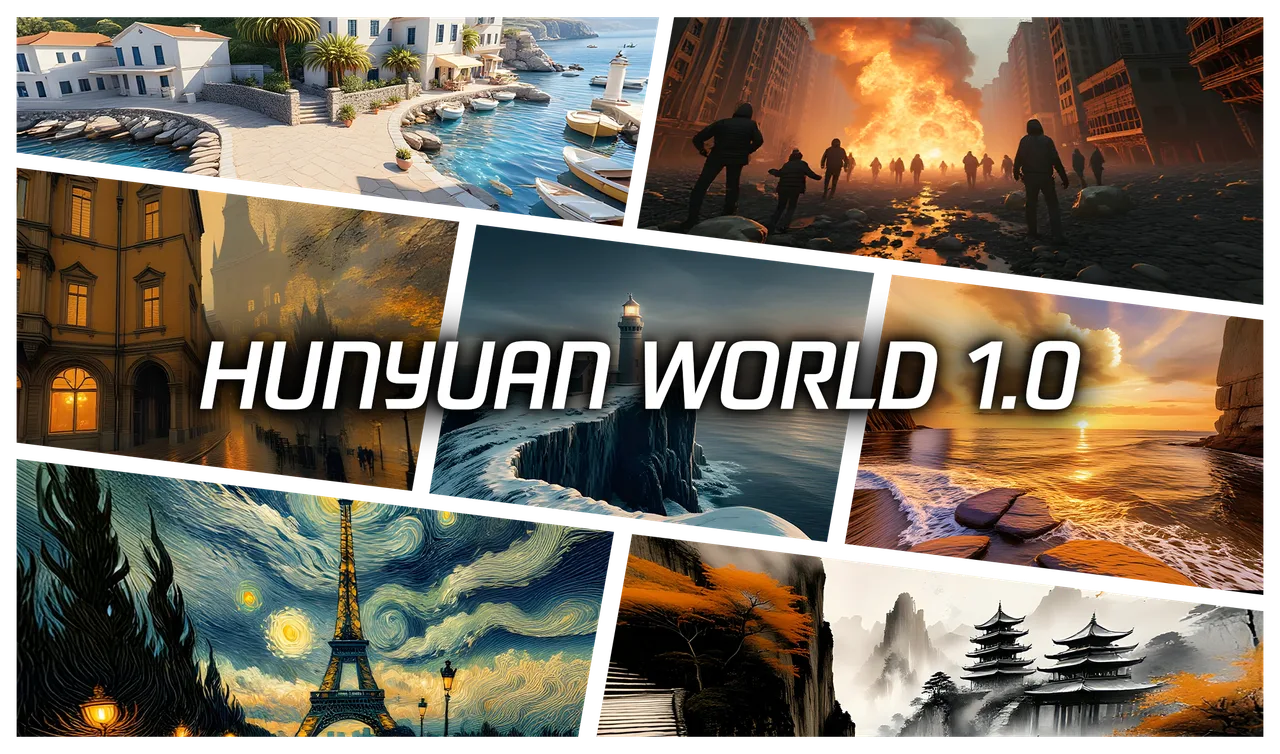
A sibling open project extends the stack from single assets to explorable 360 degree scene generation, signalling where Tencent is taking the platform next.
Recurring themes across third-party user reviews (G2, Capterra, TrustRadius).


Hunyuan3D is free and open source. There is no paid edition to upgrade to, and no feature is held back behind a licence.
| Plan | Price | What you get |
|---|---|---|
| Web studio | Free | The hosted studio grants 20 free generations per day with a Tencent login, mainly as a trial environment. |
| Self hosted (2.0/2.1) | Free (your hardware) | Weights and code are free under the Tencent Hunyuan community license. Not valid in the EU, UK or South Korea, and free commercial use ends at 1M monthly active users. |
| API, Express | USD 0.30/model | Tencent Cloud pay as you go (15 credits at USD 0.02 each). PBR materials add USD 0.20; low poly topology optimization runs USD 0.60. |
| API, Professional | USD 0.50/model | The higher quality endpoint. A typical professional generation with PBR comes to about USD 0.70. |
| Prepaid packs | From USD 0.0135/credit | One year credit packages (1,000 for USD 15 up to 100,000 for USD 1,350) cut the per credit rate versus post paid billing. |
Vehicles, machinery, architecture and props play to its measured strengths: flat planes stay flat, symmetry holds and part seams come out clean.
Eight view photo input plus material faithful PBR textures suit turning product photography into web ready 3D viewers in bulk.
The only major generator whose weights you can run on your own GPUs, keeping sensitive IP in house with no per generation cost.
Full training code, a huge GitHub community and ComfyUI integration make it the default base for 3D generation experiments.
Aggressive smoothing disfigures faces, hands and organic anatomy, and the base model outputs static meshes with no rigging (auto rigging is a separate Tencent Cloud API).
The community license explicitly excludes these territories, so the open weights cannot legally be used there; only the cloud API remains an option.
The official 2.1 pipeline wants about 10 GB of VRAM for shapes and 29 GB for the full PBR pipeline. Community builds lower the floor, at the cost of heavy system RAM use.
Yes, if you self host the open 2.0/2.1 weights, your products stay under one million monthly active users, and you are not operating in the EU, UK or South Korea, all conditions of the community license. Outside those bounds you need the paid Tencent Cloud API or a custom enterprise license.
2.1 is the newest version you can download and run locally: a 3.3 billion parameter shape model, free but hardware bound. 3.1 is the closed cloud API generation running 10 billion plus parameters, with eight view input, watertight meshes for printing and 4K/8K PBR textures.
Officially, the 2.1 pipeline takes about 10 GB of VRAM for shape generation and 29 GB for shape plus textures. The community WinPortable build with memory offloading lowers that to roughly 3 to 6 GB of VRAM, but then expect it to consume 24 GB or more of system RAM.
The texture rasterizer compiles a custom CUDA extension, and Apple Silicon has no CUDA. M series Macs can generate the untextured shape via PyTorch MPS, but PBR texturing fails, so full pipelines need an NVIDIA GPU or the cloud API.
Rarely. Self hosted output is dense raw triangles that need manual retopology and rigging before real time use. The commercial API offers a low poly topology option (about USD 0.60 per model) that gets much closer to engine ready.
Not in the base generation, output meshes are static. Tencent Cloud sells a separate auto rigging API, or you rig manually in Blender or Maya. Rivals like Meshy and Tripo include auto rigging natively.
Cloud image and text to 3D with a mandatory cleanup pass, three polygon density tiers and quad output from the Basic plan upward.
Image, sketch and text to 3D generator. Alphabet acquired the company in January 2026 and the service is no longer reachable.
Image and text to 3D built around printing: watertight output, face counts up to 2 million, and 3MF export that carries colour regions into a slicer.
Managed 2D to 3D asset production for studios, where AI generates the base mesh and in-house artists retopologise it before delivery.
AI 3D model generator that turns text prompts or images into textured, riggable meshes in about a minute.
Text, image and sketch to 3D generator with a free tier, mesh quality presets, part splitting and export aimed at both game engines and 3D printing.