Alpha3D
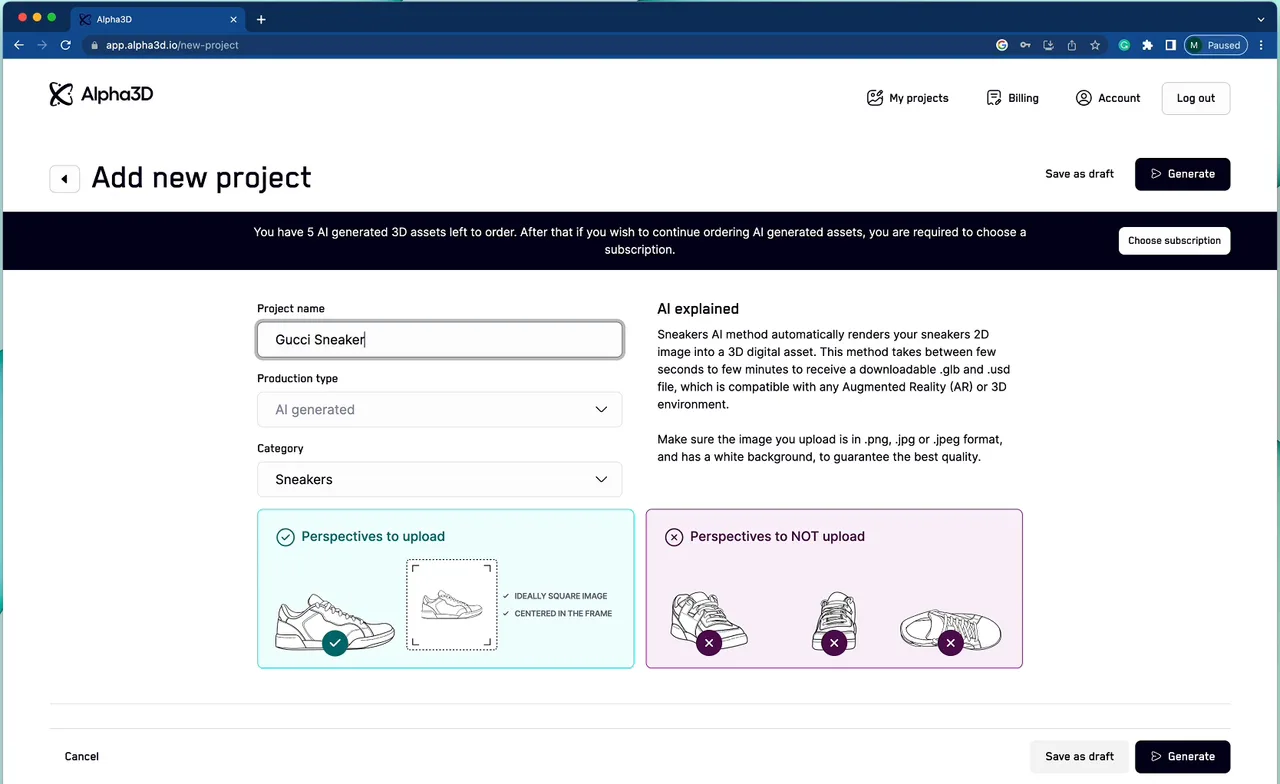
Cloud image and text to 3D with a mandatory cleanup pass, three polygon density tiers and quad output from the Basic plan upward.
AI 3D workspace by VAST that generates textured, riggable models from text, images or sketches in seconds.
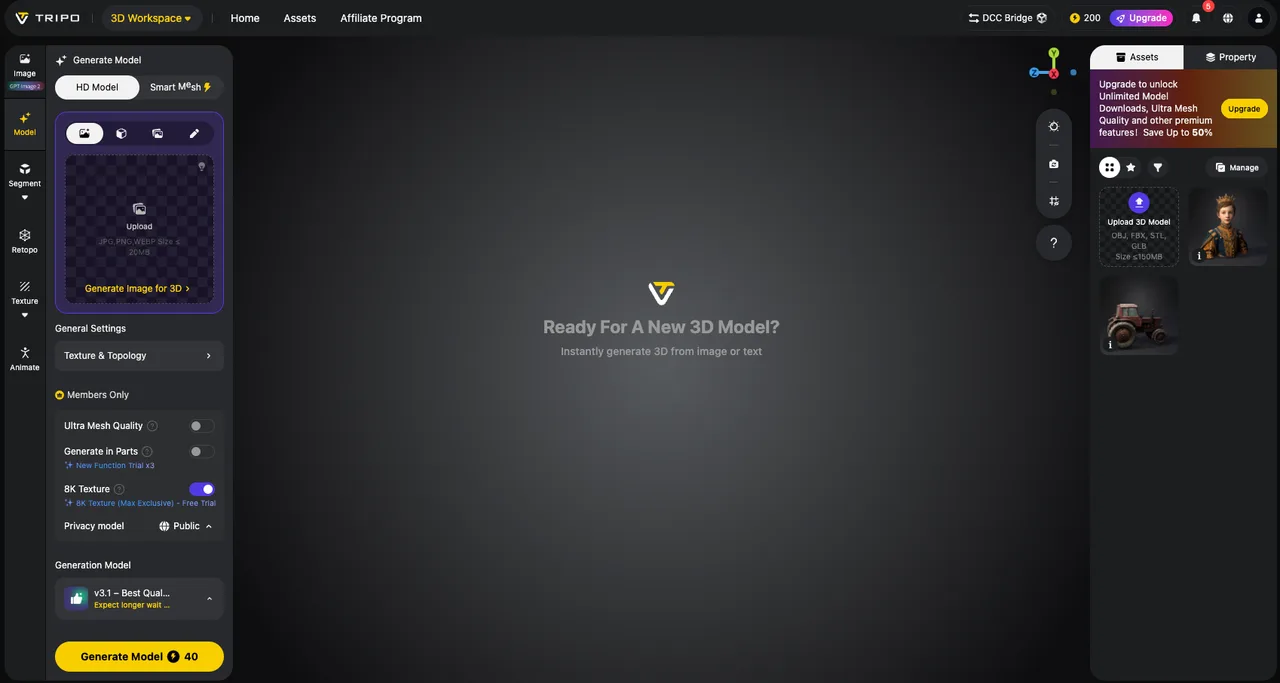
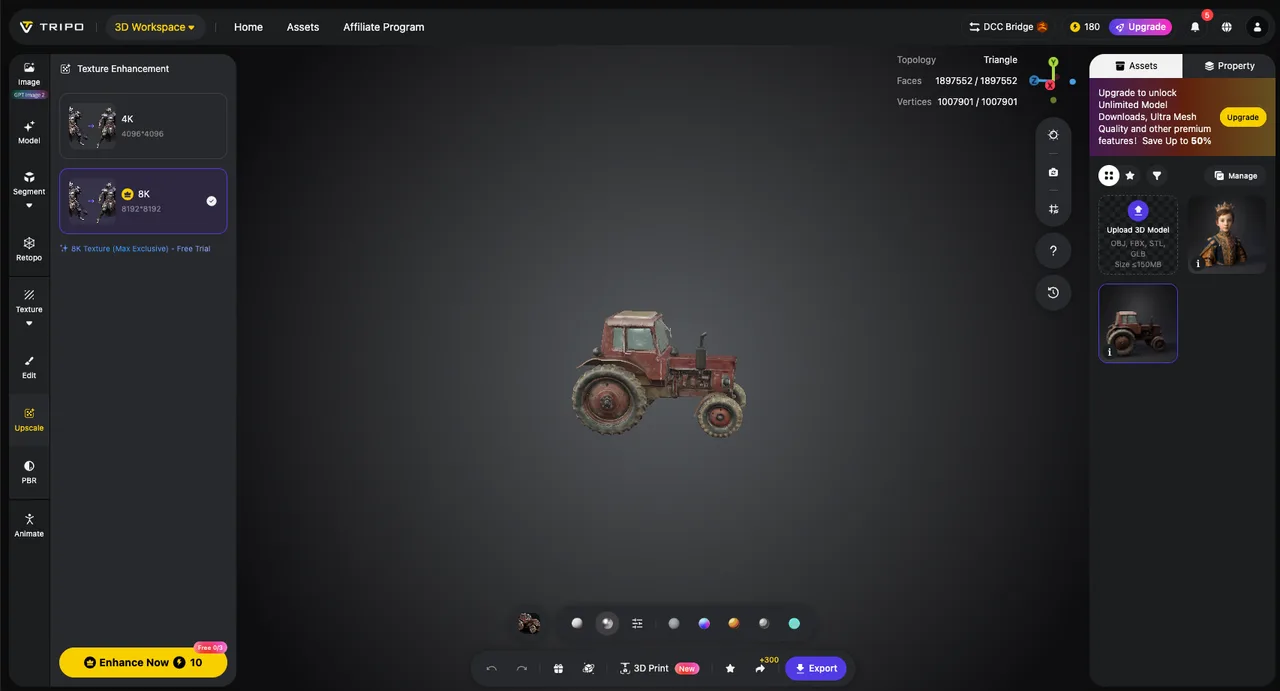
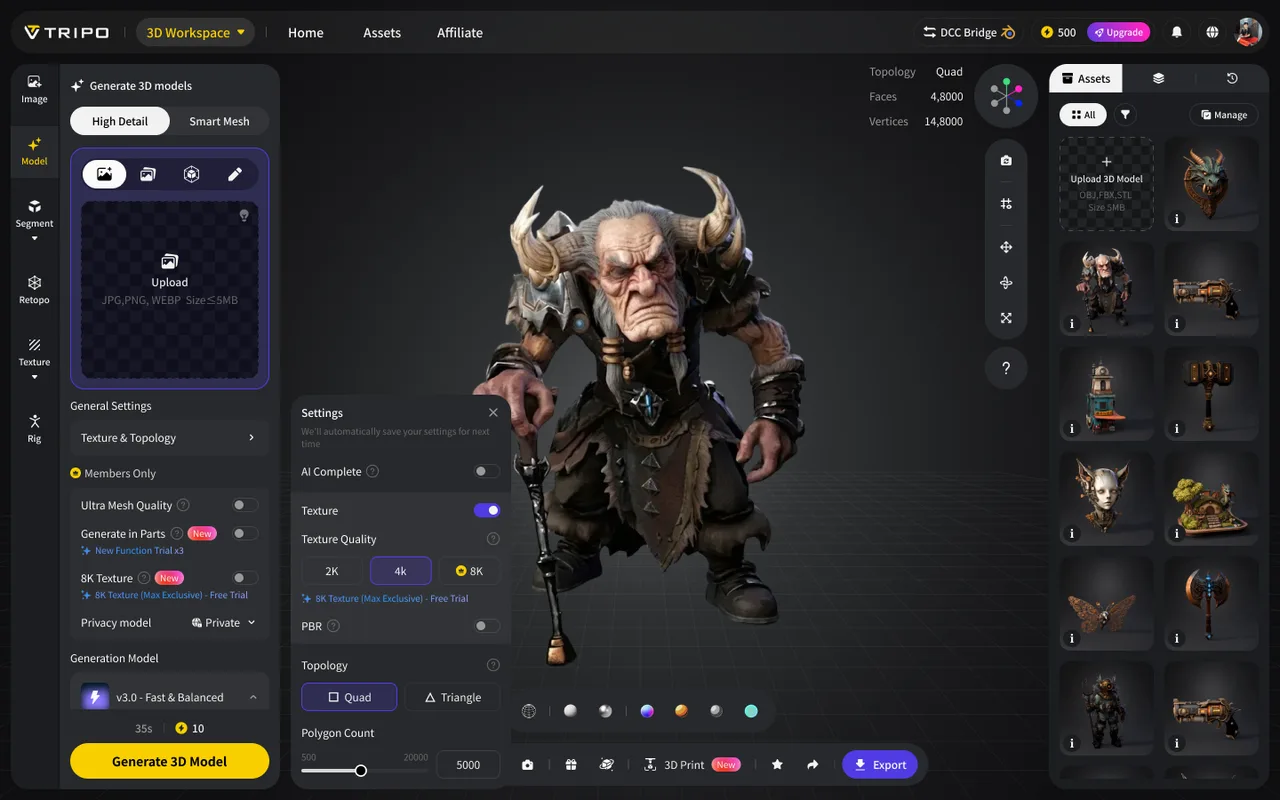

Tripo is a browser based AI 3D workspace developed by VAST, a 3D generative AI company founded in 2023 with headquarters in San Francisco and Beijing. It generates 3D models from text prompts, single or multi view images and sketches, and its defining trait versus rivals is speed with clean geometry: the Smart Mesh pipeline outputs quad dominant, game ready topology in seconds rather than the triangulated meshes AI generators are known for. In a pipeline it sits at the front of asset creation, drafting geometry that artists then finish in tools like Blender or a game engine. VAST also open sourced the TripoSR model with Stability AI for local generation, and raised roughly USD 350 million across Series A rounds in mid 2026 to fund its world model roadmap.
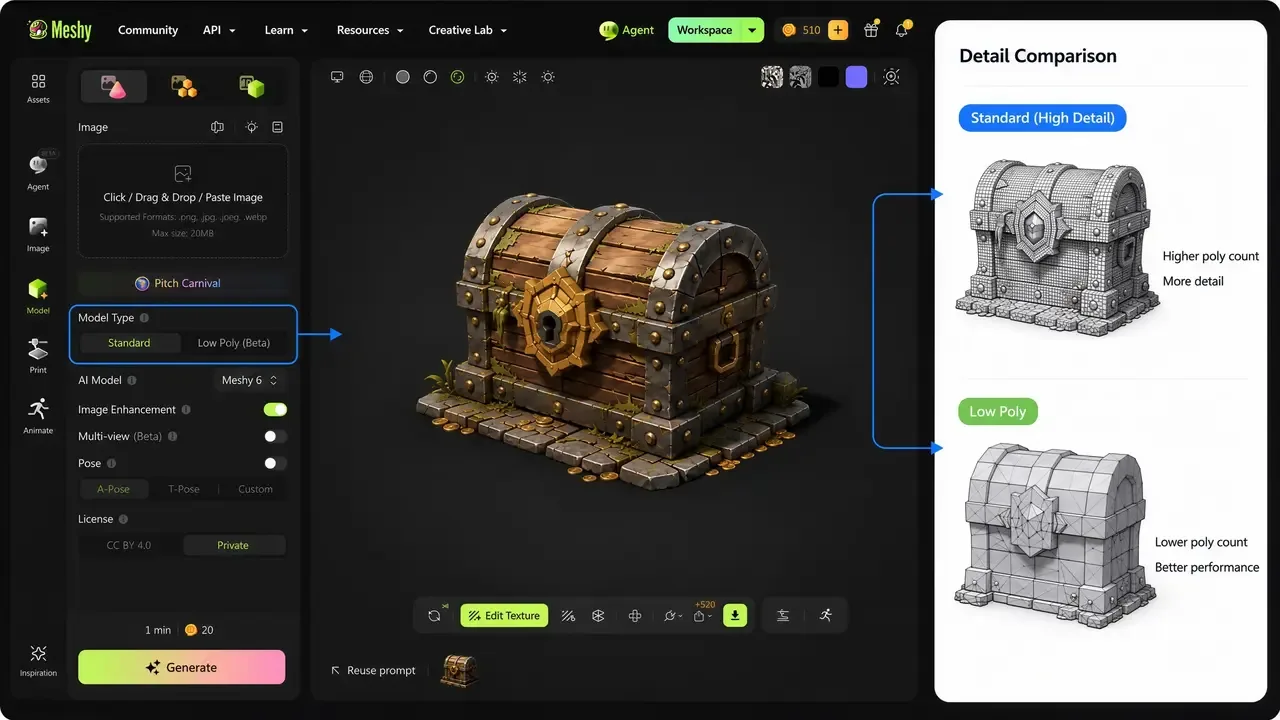
The Smart Mesh P1.0 pipeline generates organised, quad dominant low poly meshes natively in roughly 2 to 10 seconds, with parametric face counts from 500 to 20,000. It targets the biggest weakness of AI generators: unusable triangulated topology.
A separate HD Model H3.1 workflow pushes density to around two million polygons for hero assets, organic characters and 3D printing, prioritising sharp silhouettes over lightweight topology.
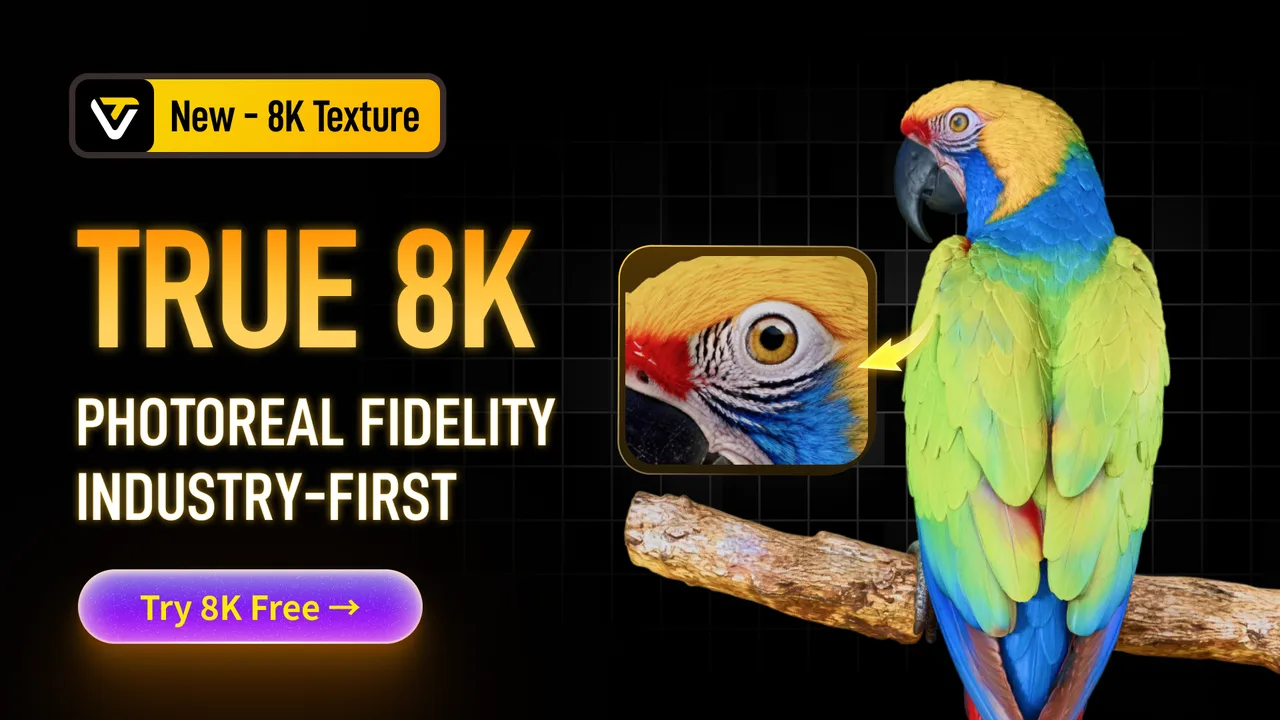
Generates PBR materials with BaseColor up to 8192x8192 plus normal and ORM maps, added in June 2026. An interactive Magic Brush repaints specific areas without touching the geometry.
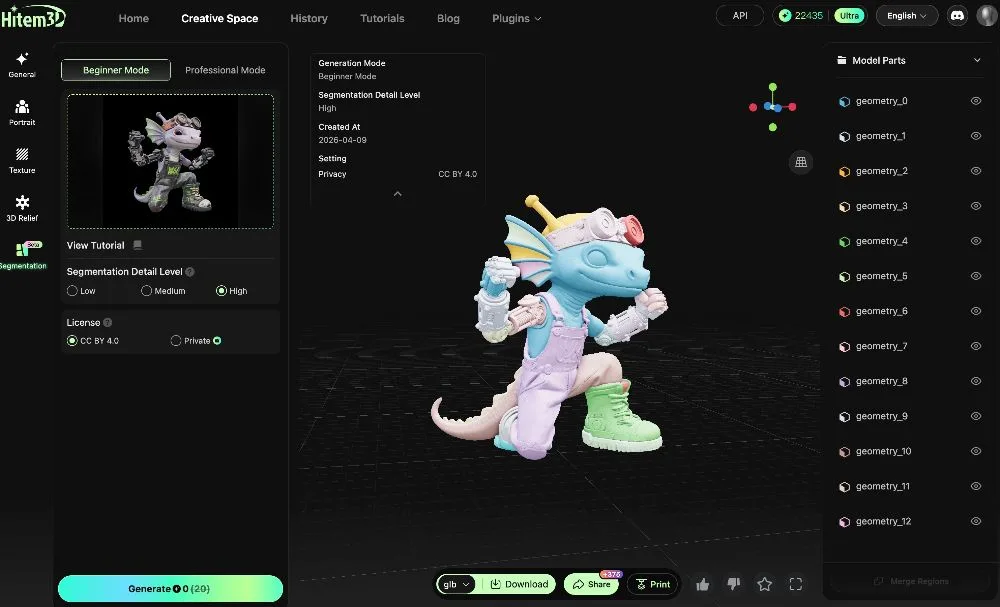
Automatically splits fused generations into separate editable components, so a generated vehicle's wheels can be detached from the chassis for individual animation or printing.
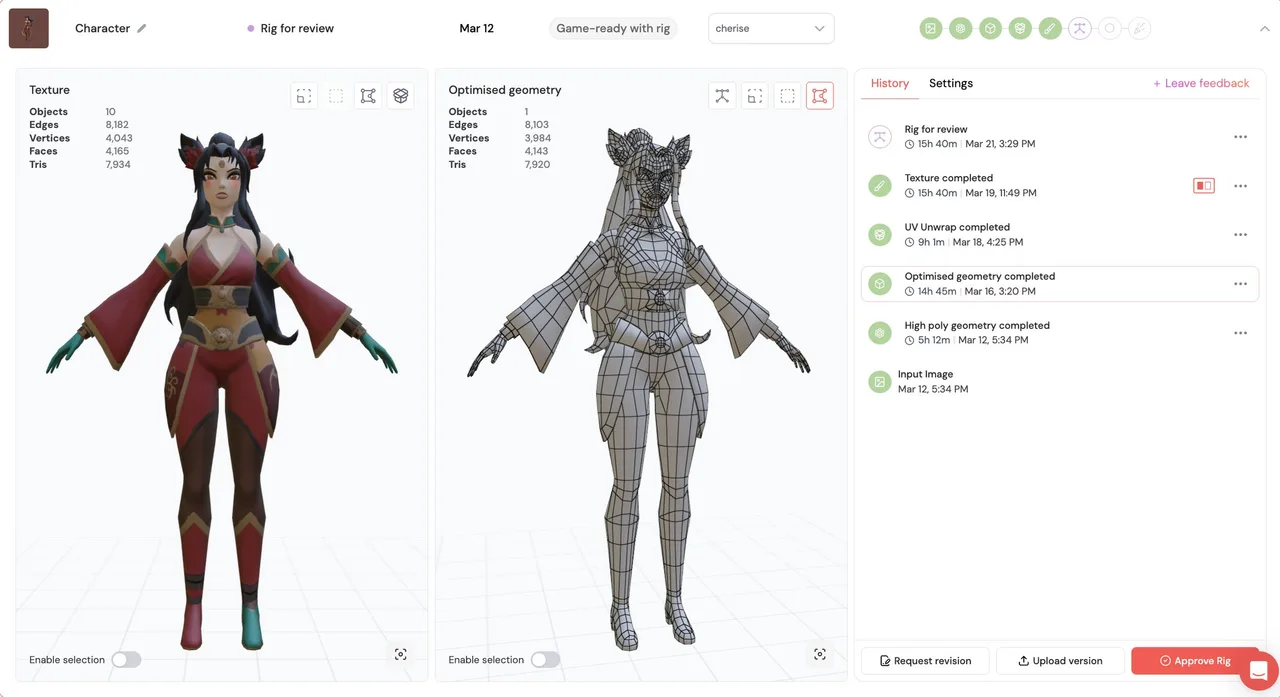
Attaches a clean T pose skeleton with weight painting automatically, covering quadrupeds and multi legged creatures as well as bipeds, with rigs compatible with Mixamo animation libraries.
Pay as you go API from USD 0.01 per credit, official plugins for Blender, Unity, Unreal, Godot, Cocos and ComfyUI, plus TripoSR, an MIT licensed open source model for local single image 3D generation.
Recurring themes across third-party user reviews (G2, Capterra, TrustRadius).


Tripo is free to start. There is a free tier you can use indefinitely, and paid plans begin at USD 19.90/month.
| Plan | Price | What you get |
|---|---|---|
| Free | USD 0 | 200 credits per month (roughly 8 basic models), 15 downloads per month. Results are public under CC BY 4.0 and cannot be used commercially. |
| Pro | USD 19.90/month | USD 13.93/month billed yearly. 3,000 credits, Smart Mesh, multi view input, batch generation, private models and full commercial rights. |
| Max | USD 89.90/month | USD 53.94/month billed yearly. 25,000 credits, 100 concurrent tasks, dedicated processing and unlimited retries. |
| Team | USD 109.90/seat/month | USD 54.93/seat/month billed yearly. 45,000 credits per seat with shared workspaces and central billing. |
| API | USD 0.01/credit | Prepaid pay as you go. A standard generation runs about 10 to 30 credits; rigging, segmentation and refinement bill extra credits per task. |
Quad dominant meshes at strict polygon budgets suit Unity, Godot and Roblox work, and official engine plugins import results without manual file juggling.
Generation in seconds makes it practical to populate a scene with placeholders while exploring scale, lighting and composition.
Watertight output logic plus direct STL and 3MF export feed straight into slicers like Bambu Studio and Cura.
API access starts at pay as you go rates from onboarding, unlike rivals that gate their APIs behind higher tiers.
Generated topology, even quad dominant, lacks the deliberate edge loops facial morph targets and close up deformation demand, so hero characters still need manual retopology.
Reviewers consistently find Tripo's default textures flatter and less photoreal than Meshy or Rodin output, often finishing assets in Substance Painter.
Inverted normals, overlapping UVs and rig tweaks still happen. The tool accelerates people who know 3D basics; it does not replace that knowledge.
On paid plans (Pro and above) yes, with private ownership and royalty free commercial rights. Free tier results are published publicly under CC BY 4.0, which requires attribution and bars them from commercial, monetised projects.
Mostly. Tripo aims for manifold, watertight output and exports STL and 3MF directly for slicers, but complex organic generations can still contain small non manifold edges, so a quick check in mesh repair software before printing is wise.
Smart Mesh outputs low poly, quad dominant topology (500 to 20,000 faces) in seconds for games and AR. HD mode generates up to about two million polygons for hero assets and printing, trading speed and file weight for detail.
The cloud API costs roughly USD 0.10 to 0.30 per completed asset with zero setup. TripoSR is free and MIT licensed but only covers basic single image reconstruction and needs a capable NVIDIA GPU (roughly 12 GB VRAM) plus comfort with local Python tooling.
Tripo charges credits per generation attempt regardless of quality, and AI generation is probabilistic. Iterating on a difficult prompt can burn through a monthly quota, which is the most common billing complaint in user reviews.
GLB by default, plus FBX (with skeleton data), OBJ, USD/USDZ, and STL or 3MF for 3D printing.
Cloud image and text to 3D with a mandatory cleanup pass, three polygon density tiers and quad output from the Basic plan upward.
Image, sketch and text to 3D generator. Alphabet acquired the company in January 2026 and the service is no longer reachable.
Image and text to 3D built around printing: watertight output, face counts up to 2 million, and 3MF export that carries colour regions into a slicer.
Tencent's AI 3D generator with open weights for self hosting and a commercial cloud API, strongest on hard surface geometry.
Managed 2D to 3D asset production for studios, where AI generates the base mesh and in-house artists retopologise it before delivery.
AI 3D model generator that turns text prompts or images into textured, riggable meshes in about a minute.