TRELLIS
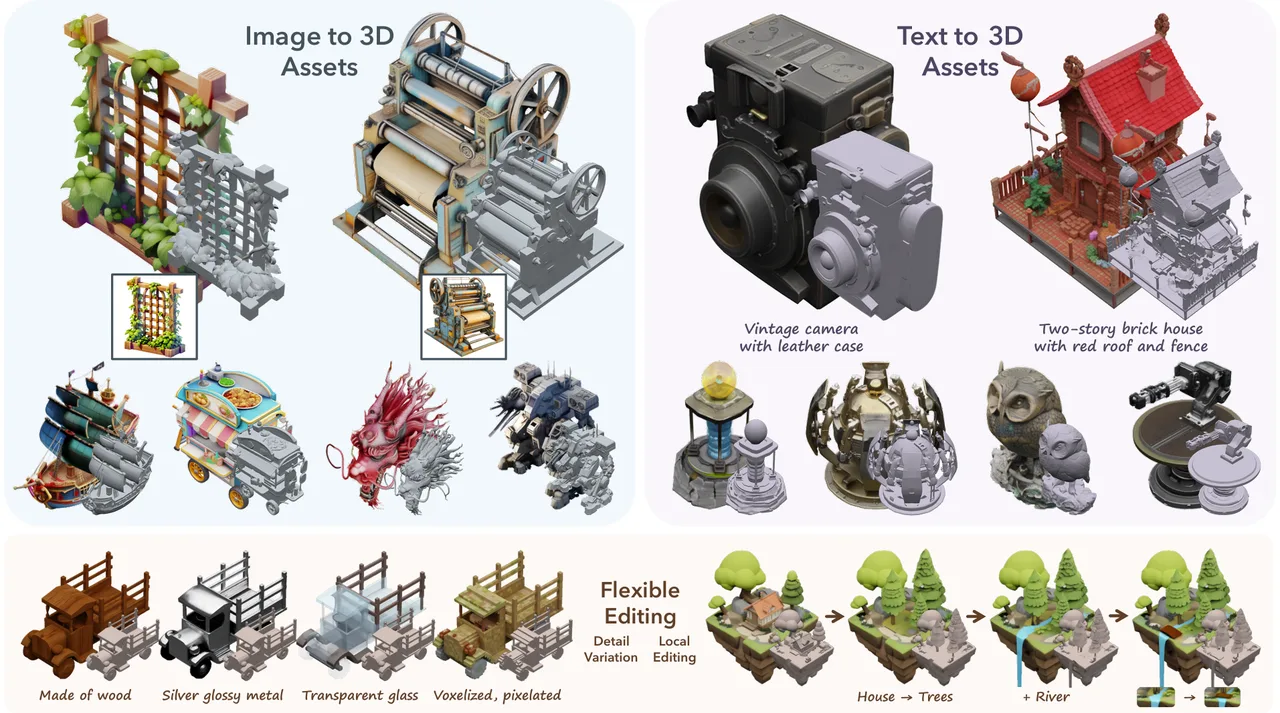
Microsoft's open MIT-licensed image and text to 3D model. Exports GLB with PBR textures, and takes a simplify parameter to cut the face count.
Open MIT-licensed single-image to 3D model from VAST AI and Stability AI. Runs locally, exports OBJ or GLB, and bakes colour into vertices rather than textures.
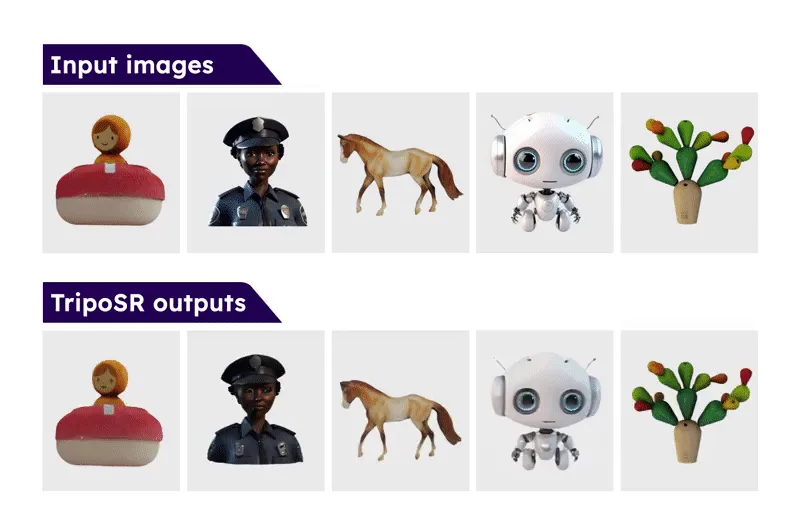
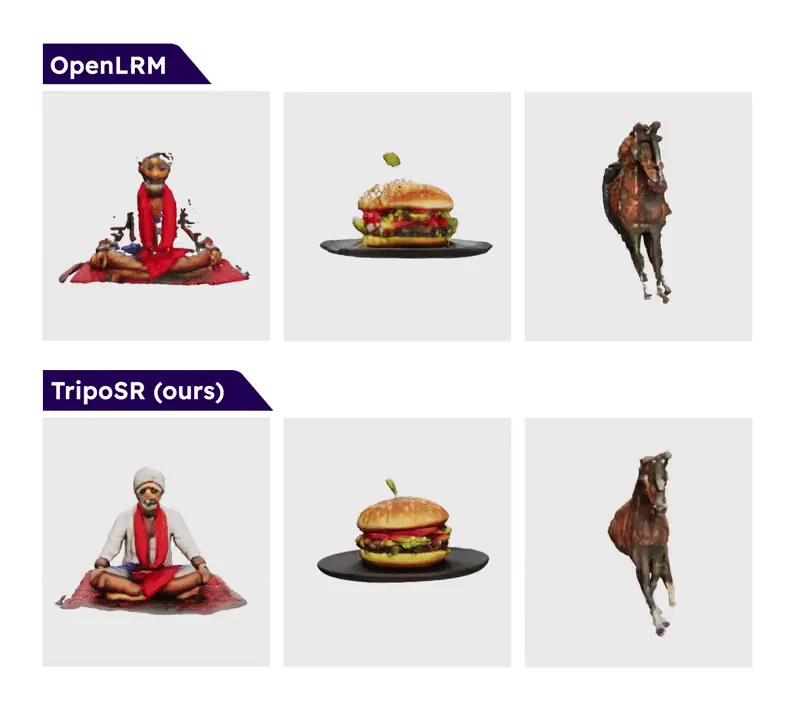
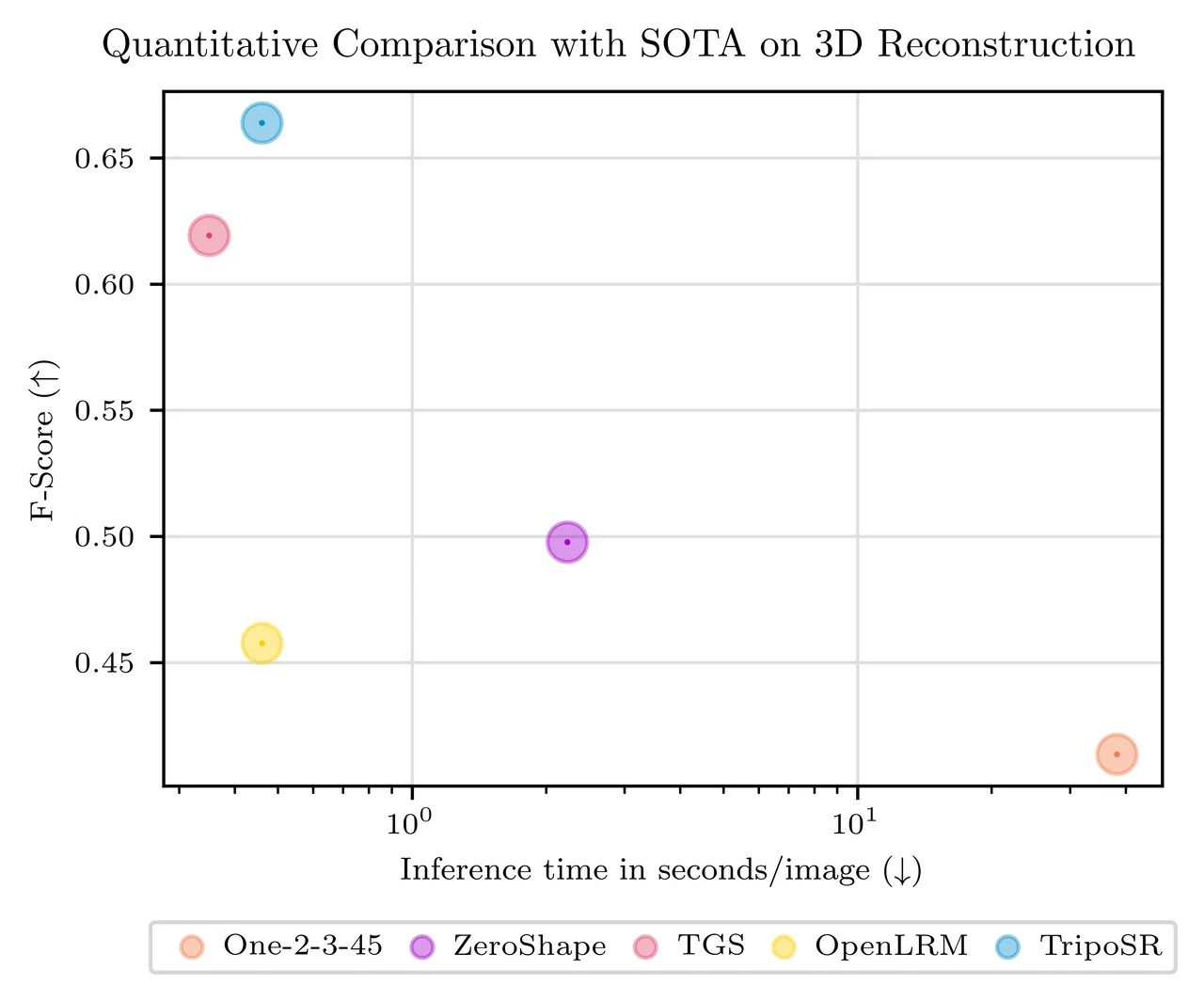
TripoSR is an open image-to-3D model released by VAST AI in partnership with Stability AI. It reconstructs a mesh from one photo in seconds on a consumer GPU, and both the code and the pretrained weights are MIT licensed, which means no revenue cap, no royalty and no restriction on selling what you make with it. It is a research model rather than a product: there is no interface, no polygon control, and it writes colour into vertices instead of producing textures, which is the thing that catches most people out downstream. Not to be confused with Tripo, the commercial platform from the same company, which is a separate entry.
The permissive licence covers the pretrained weights and not just the source, so commercial use carries no revenue threshold, royalty or copyleft obligation. Among open 3D generation models that combination is the exception rather than the rule.
Designed for speed on one consumer GPU rather than for maximum fidelity on a cluster, which makes it practical to batch or to wire into a script.
No account, no credits, no upload. For anyone working under an NDA or on unreleased concept art, keeping the image on your own machine is the feature.
By default there are no UVs at all. The --bake-texture and --texture-resolution flags force an unwrap and produce a texture atlas, at a real cost in inference time and VRAM. Knowing this flag exists saves a lot of confusion.
Recurring themes across third-party user reviews (G2, Capterra, TrustRadius).
TripoSR is free and open source. There is no paid edition to upgrade to, and no feature is held back behind a licence.
| Plan | Price | What you get |
|---|---|---|
| MIT licence | Free | Code and pretrained weights. Commercial use, modification and redistribution permitted with no revenue cap or royalty. You pay only for the hardware you run it on. |
A local script with a permissive licence beats a credit-metered API when you want to run thousands of images, or run them offline.
Unreleased concept art and client work under NDA rule out most hosted generators. Running locally removes the question.
The output is a fast approximation of a shape. As a starting mesh to retopologise or sculpt over, that is exactly enough.
Colour is baked into vertices, so the model appears untextured in Blender until you wire a Color Attribute node into Base Color by hand. Converting that to a real texture map means a baking workflow, which is the most common complaint about this model.
Raw output is frequently non-manifold, and slicers including Bambu Studio and Creality Print often read the OBJ as a zero-thickness shell with no interior volume. A Boolean union or a solidify pass is required before printing.
There is no polygon control in the open model at all. Density is whatever the network produced, and reducing it is your job in another tool.
Topology is unorganised dense triangles with no edge flow. Binding it to a skeleton produces stretching and pinching, so retopology is mandatory rather than advisable.
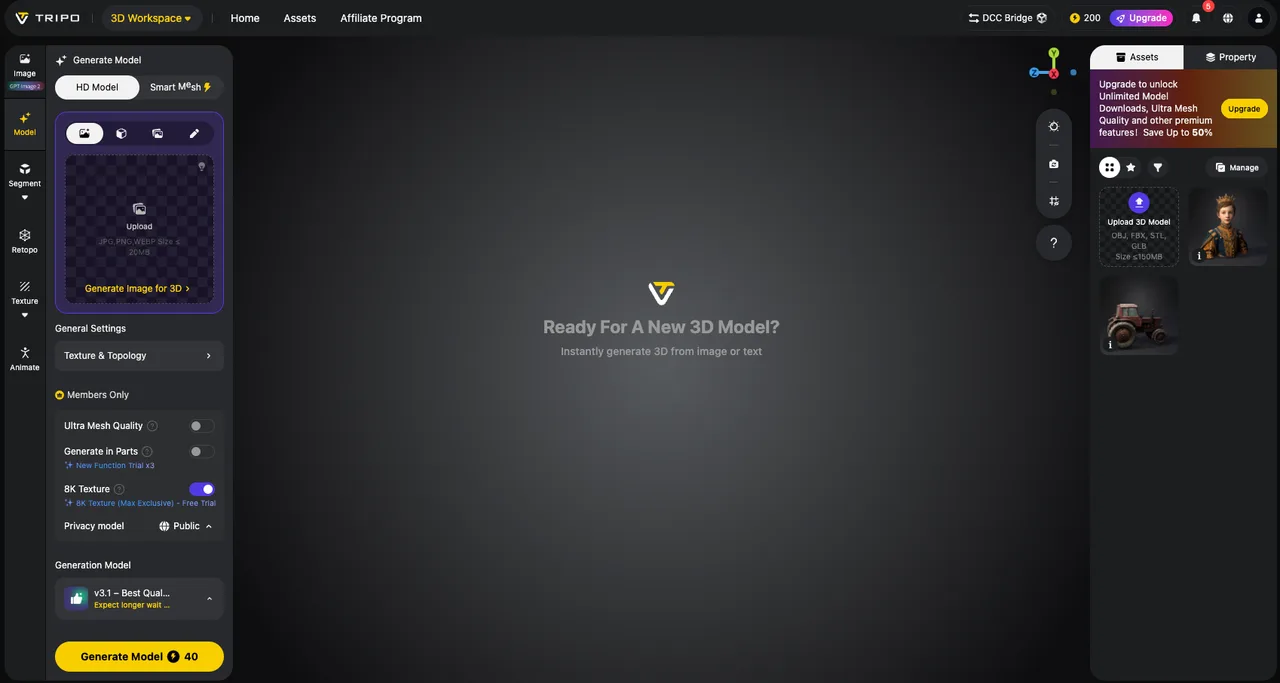
No, though they come from the same company. TripoSR is the open MIT-licensed research model you run yourself. Tripo is the commercial hosted platform, with polygon targets, automatic UV unwrapping, PBR maps and a wider export list. They are separate entries here because they behave completely differently downstream.
Because TripoSR writes colour into vertices rather than generating a texture. Blender does not show vertex colours by default. Add a Color Attribute node in the shader editor and connect it to Base Color on the Principled BSDF and the colour appears. To get an actual texture file instead, run with --bake-texture and --texture-resolution, which costs inference time and VRAM.
Yes. The MIT licence covers the code and the pretrained weights, with no revenue threshold, royalty or copyleft requirement. This is a meaningful difference from models released under community licences that restrict commercial use above a revenue figure.
Not without work. The raw mesh is frequently non-manifold, and independent testing reports slicers treating the OBJ as an outer shell with zero thickness and no volume to fill. A Boolean union or solidify operation in Blender is the usual fix before slicing.
A consumer GPU and a Python environment. There is no interface, no account and no credit system: you clone the repository, install the dependencies and run the script, which exports OBJ by default and GLB with a command-line flag.
Microsoft's open MIT-licensed image and text to 3D model. Exports GLB with PBR textures, and takes a simplify parameter to cut the face count.
Tencent's AI 3D generator with open weights for self hosting and a commercial cloud API, strongest on hard surface geometry.
AI 3D workspace by VAST that generates textured, riggable models from text, images or sketches in seconds.
Stability AI's two-stage image to 3D model with built-in triangle and quad remeshing. Free under a revenue threshold, and dormant since May 2025.