TripoSR
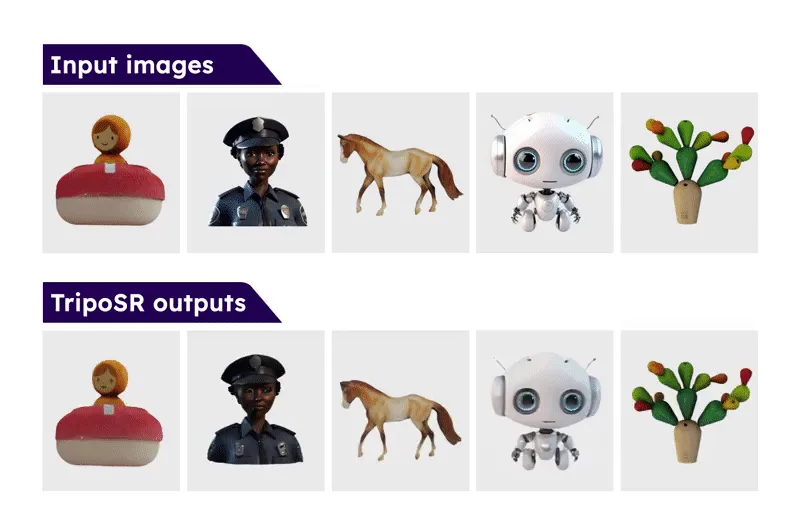
Open MIT-licensed single-image to 3D model from VAST AI and Stability AI. Runs locally, exports OBJ or GLB, and bakes colour into vertices rather than textures.
Microsoft's open MIT-licensed image and text to 3D model. Exports GLB with PBR textures, and takes a simplify parameter to cut the face count.
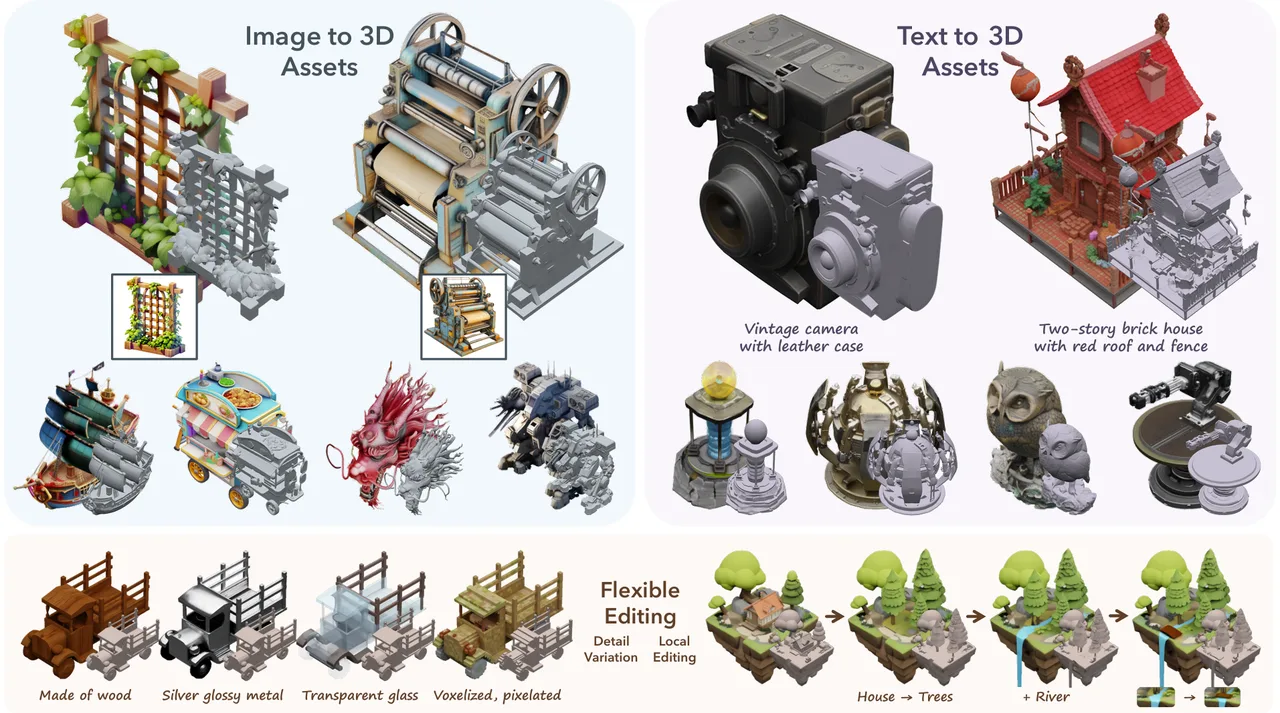
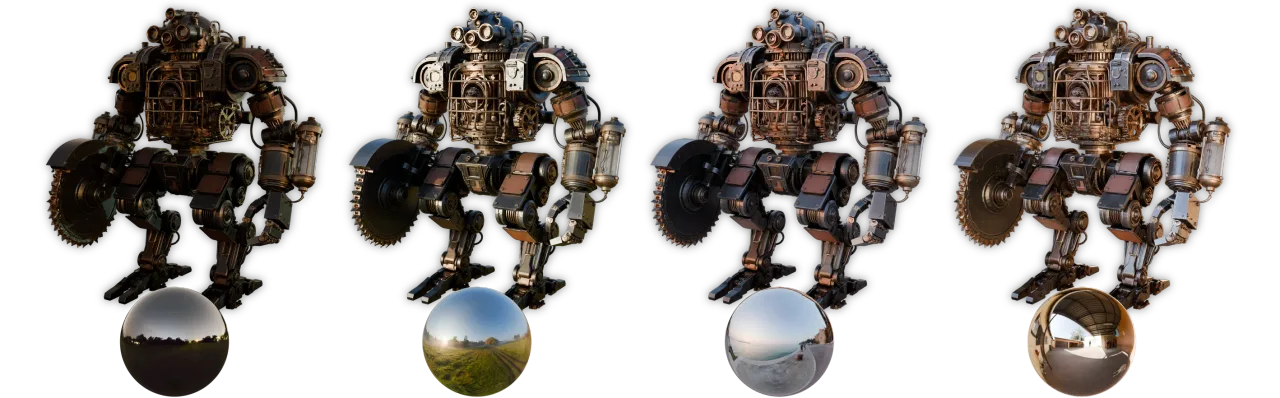
TRELLIS is Microsoft Research's open 3D generation model, released alongside a CVPR 2025 spotlight paper and among the most widely adopted open models in the field. It generates from images or text into a structured latent representation that can be read out as a triangle mesh with PBR textures, as 3D Gaussians, or as a radiance field, which is unusual: most models commit to one output form. It is MIT licensed and self-hosted, with no accounts or credits. The second generation moves to a different internal representation and ships as a separate, larger model.
The structured latent can be decoded as a textured triangle mesh, as 3D Gaussians, or as a radiance field. That flexibility is the research contribution, and in practice it means the same generation can serve a game asset and a splat viewer without regenerating.
The simplify argument runs quadric edge collapse during extraction, so simplify=0.95 cuts about 95 percent of the raw face budget. It is a command-line number rather than a slider, but it is genuine decimation in the pipeline, which most open models leave to you.
No revenue threshold, no royalty, no gated download. Commercial use is unrestricted, which is not the case for several competing open releases.
GLB export carries UVs and PBR maps rather than vertex colour, so assets light correctly in an engine without a shader-rebuilding step. The UV islands are fragmented rather than logically laid out, which matters if you intend to hand-edit the texture.
Recurring themes across third-party user reviews (G2, Capterra, TrustRadius).
TRELLIS is free and open source. There is no paid edition to upgrade to, and no feature is held back behind a licence.
| Plan | Price | What you get |
|---|---|---|
| MIT licence | Free | Code and weights, self-hosted. No usage limits, no revenue threshold. You provide the GPU. |
MIT with no revenue cap and no gated weights is about as unencumbered as an open 3D model gets, which matters when the output ships commercially.
Self-hosted means iteration costs electricity rather than credits, which changes how much experimenting is reasonable.
Reading the same latent out as Gaussians or as a mesh avoids committing to a representation up front.
The representation permits open surfaces and non-manifold intersections, so raw exports routinely fail in Cura and PrusaSlicer. The pipeline calls pymeshfix to compensate, and users report that automatic hole-filling is not enough on complex shapes, leaving manual repair in MeshLab or Blender.
GLB exports default to OPAQUE mode with the alpha channel switched off, even when the model inferred translucency into it. The fix is manual: set the material to masked or translucent in your engine and route alpha into opacity.
Output is polygonal, with no STEP or IGES and no NURBS surfaces. In a CAD package it is a dense reference body you cannot parametrically edit.
There is no hosted interface in the official repository. Running it means installing dependencies and having the VRAM to hold the model.
Yes, without restriction. It is MIT licensed, with no revenue threshold, royalty or gated download. That is a real difference from open models released under community licences that stop being free above a revenue figure.
Yes, through the simplify parameter during extraction, which applies quadric edge collapse. Passing simplify=0.95 removes roughly 95 percent of the raw faces. It is a command-line argument rather than a slider, but the decimation is real and happens in the pipeline.
Not reliably as exported. The internal representation allows open surfaces and non-manifold intersections, so slicers frequently reject the raw file. The pipeline runs pymeshfix to weld and clamp vertices, but users report this is not enough on complex geometry, and finish the repair in MeshLab or Blender.
Because GLB export sets the material to OPAQUE and deactivates the alpha channel, even when transparency was inferred and written into it. In Unreal or Unity, switch the material domain to masked or translucent and connect the alpha channel to the opacity input to get it back.
A GPU with enough VRAM for the model and a Python environment. There is no hosted interface in the official repository, so this is a self-hosting exercise rather than a sign-up.
Open MIT-licensed single-image to 3D model from VAST AI and Stability AI. Runs locally, exports OBJ or GLB, and bakes colour into vertices rather than textures.
Tencent's AI 3D generator with open weights for self hosting and a commercial cloud API, strongest on hard surface geometry.
Stability AI's two-stage image to 3D model with built-in triangle and quad remeshing. Free under a revenue threshold, and dormant since May 2025.
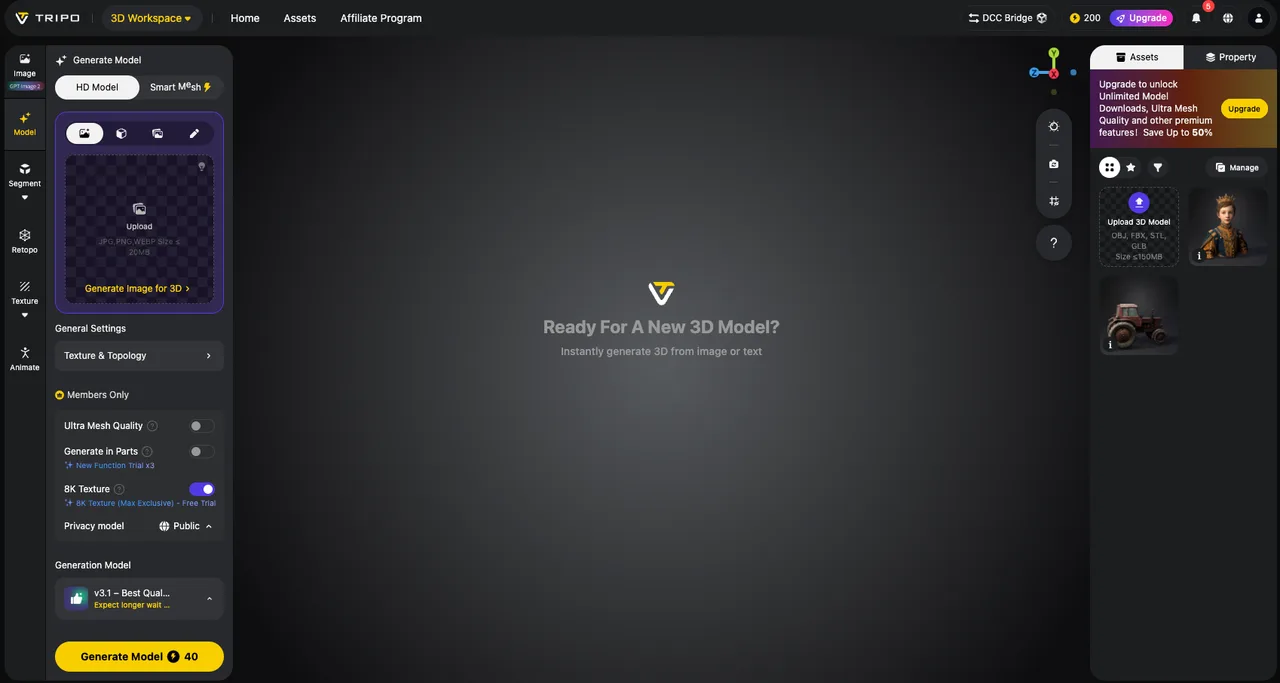
AI 3D workspace by VAST that generates textured, riggable models from text, images or sketches in seconds.