Meshy
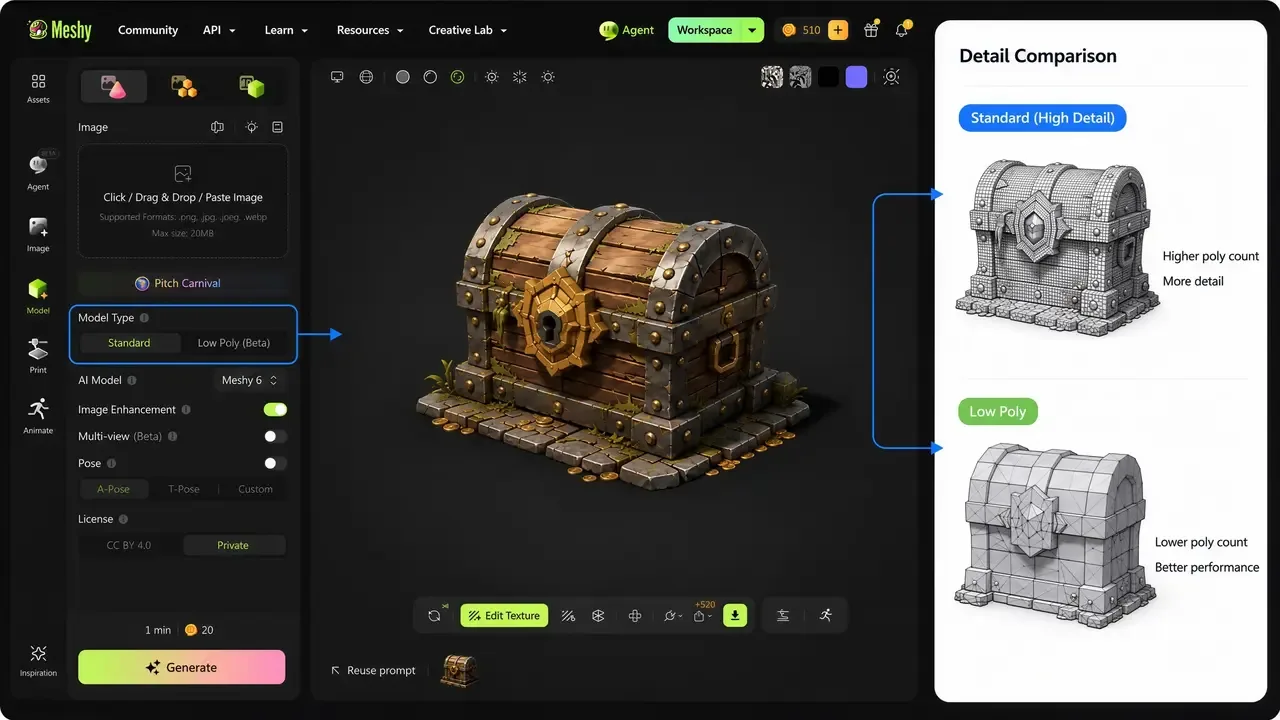
AI 3D model generator that turns text prompts or images into textured, riggable meshes in about a minute.
Parametric 3D asset generator with triangle targets, a quad or triangle toggle and a print mode that enforces watertight geometry.
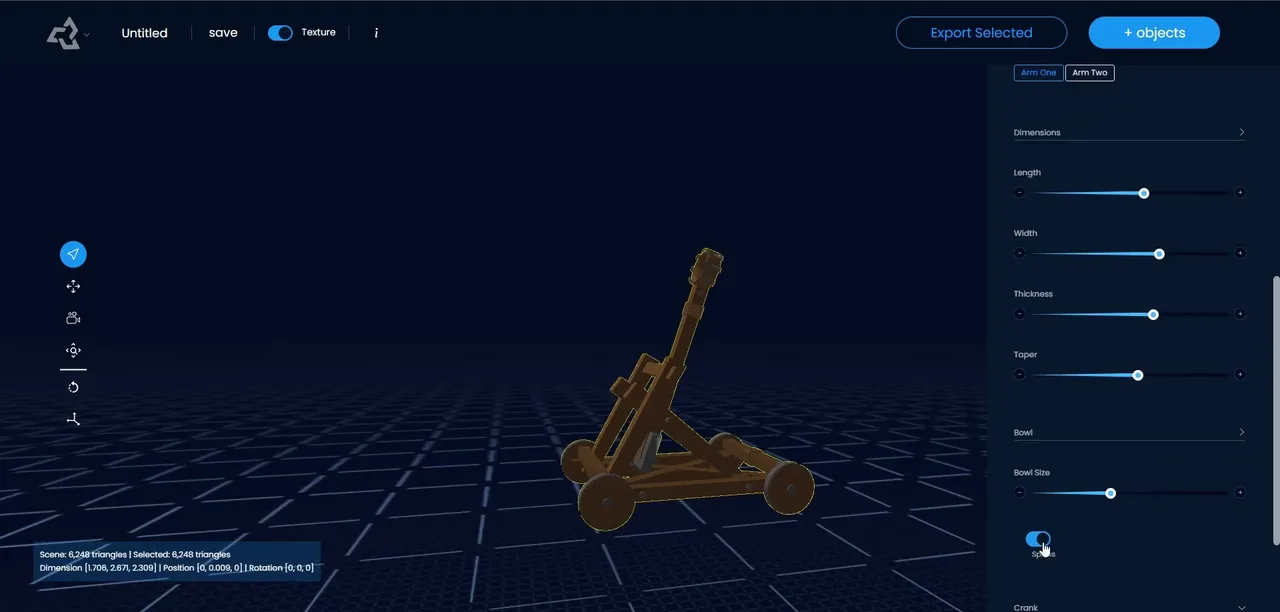
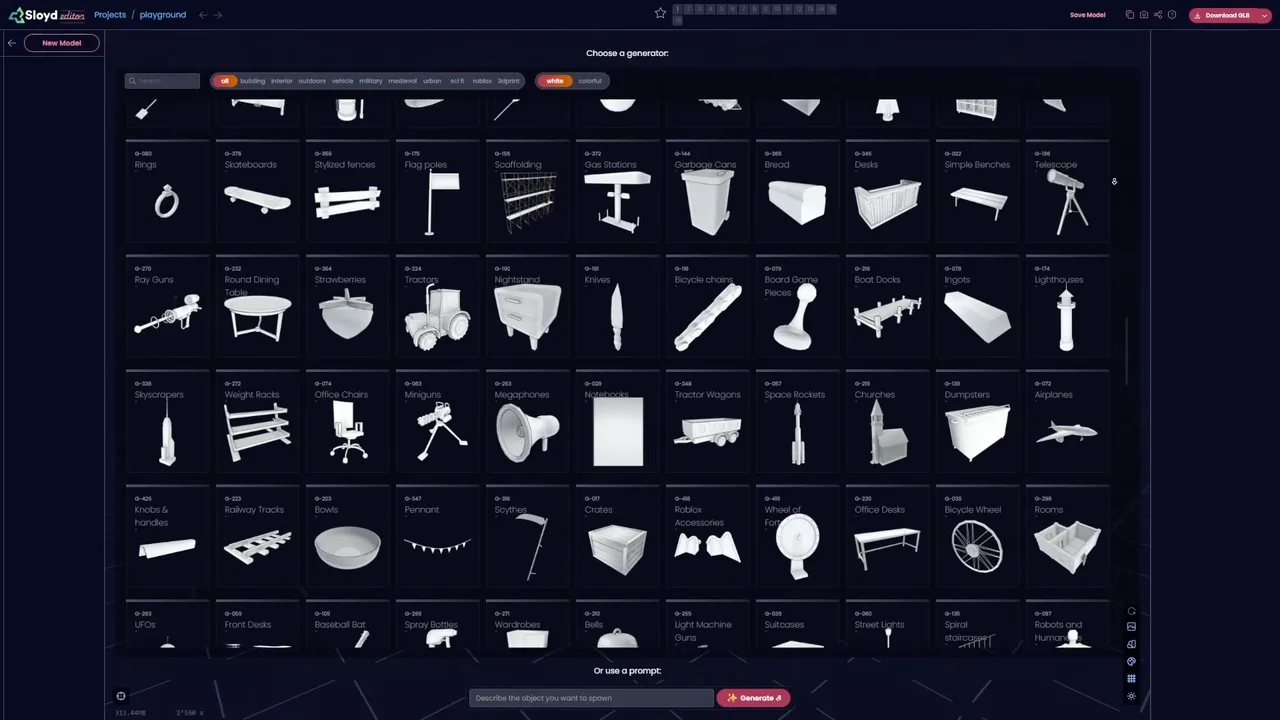
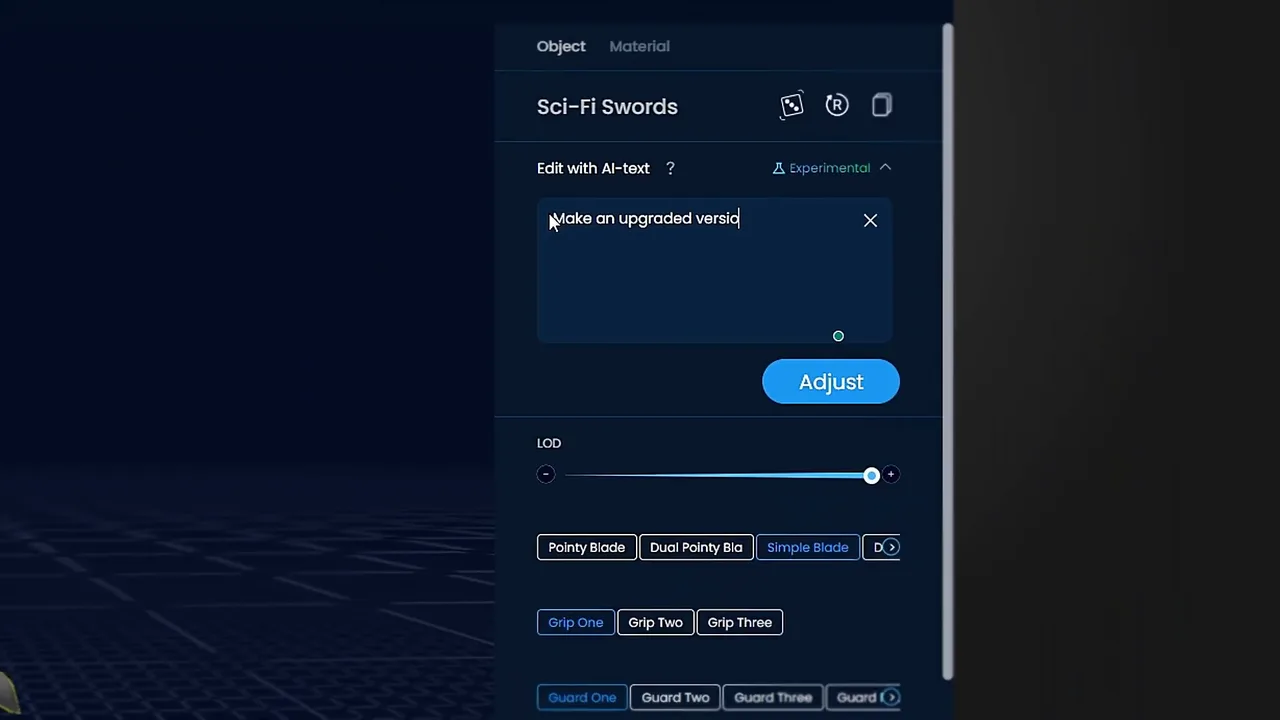
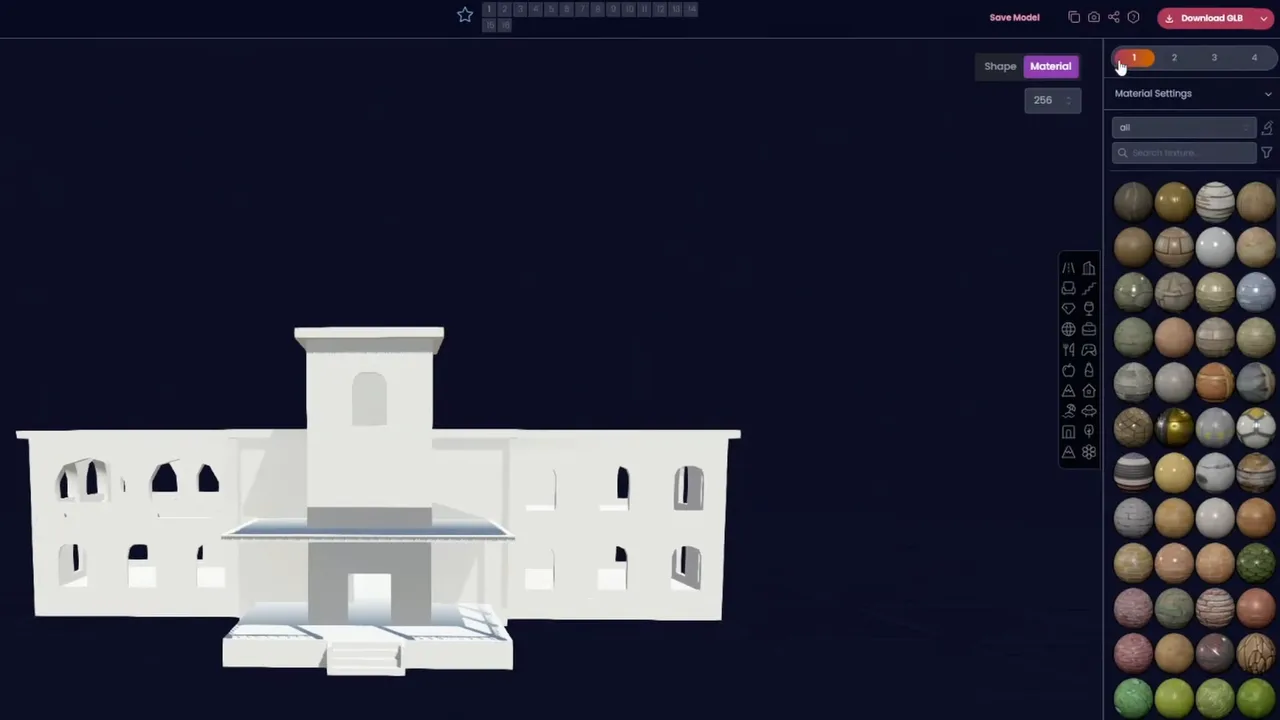
Sloyd generates 3D assets from parametric templates as well as from text and images, and that ordering is the point. A template is a shape the system already understands, adjusted with sliders, so the topology is authored rather than inferred. That is why Sloyd can offer things most generators cannot: a specific triangle target, a switch between quad and triangle output, and a print mode that enforces watertight geometry. Its purely generative image-to-3D path behaves more like the rest of the category, and reviewers report the same cleanup work there.
The core library is parametric: pick a shape, then drive it with sliders. Because the topology comes from a template rather than from inference, the mesh is clean by construction instead of by cleanup. This is the single thing that separates Sloyd from the rest of this category.
Level of detail is a number you set, so an asset can be built to a platform's budget rather than decimated afterwards. Reviewers cite targets such as staying under 10,000 triangles for Roblox, which is the kind of constraint a generated mesh normally fails.
Triangles for real-time engines, quads for anything that will be subdivided or rigged. Most generators return triangles only, which is what forces a retopology pass before a character can deform properly.
A preset that aims at manifold, watertight geometry: no holes, no intersecting faces, no zero-thickness walls. Worth knowing that Sloyd's own troubleshooting page still expects slicer errors sometimes and points users at a repair function, so treat this as improving the odds rather than as a guarantee.
The docs are explicit about this, which is rare and useful. GLB, FBX, USDZ, BLEND and the OBJ-ZIP option embed textures; plain OBJ, USD, STL, PLY and 3MF carry geometry only. FBX textures import cleanly in Blender and Unreal but need separating by hand for Unity and 3DS Max.
None, 512, 1k, 2k, or 4k on the Pro plan. Combined with the face target and the topology choice, that is three of the properties that usually get decided for you by a generator and then have to be undone downstream.
Recurring themes across third-party user reviews (G2, Capterra, TrustRadius).


Sloyd is free to start. There is a free tier you can use indefinitely, and paid plans begin at USD 15/month.
| Plan | Price | What you get |
|---|---|---|
| Guest | USD 0 | Free. The comparison table lists no monthly AI credits on this tier and limits exports to community models, so it is a way to try the editor rather than a way to export your own generations. |
| Sloyd Plus | USD 15/month | 50 AI credits a month and unlimited exports. USD 12.50/month billed yearly, charged as USD 150. |
| Sloyd Pro | USD 50/month | 350 AI credits a month. USD 41.67/month billed yearly, charged as USD 500. |
A triangle target you set, plus a quad or triangle choice, means assets arrive at the density the platform allows. That removes the retopology step that generated meshes normally require before they can ship.
Print mode enforces watertight geometry at generation time, which is the property slicers actually check. Reviewers report dragging Sloyd files straight into a slicer without a repair pass.
Parametric templates are built for this: change the sliders, get another version with the same clean topology. Prompt-driven generators produce a different mesh each time, which is the opposite of what a set of matching props needs.
The strength is the template library and the parameters on it. If the thing you need is not close to a template, you fall back to the generative path, where Sloyd behaves much like everything else in the category.
The Guest plan lists no monthly AI credits and restricts exports to community models. Exporting your own generated assets starts on Plus.
Quad output helps, but algorithmic edge flow is not the same as edge loops placed by an artist around a mouth or a shoulder. Anything that has to deform expressively still wants manual retopology.
Those infer a mesh from a prompt or an image. Sloyd's core library is parametric: the shape already has topology and you adjust it with sliders. That is why it can promise a triangle target, a quad option and watertight print output, none of which a purely inferred mesh can guarantee. Sloyd also has a generative image-to-3D path, and on that path the difference largely disappears.
Partly. The Guest tier is free and needs no card, but the pricing comparison lists no monthly AI credits on it and limits exports to community models. You can explore the editor; exporting your own generated assets starts on Plus at USD 15 a month.
Usually closer than the category norm, but not guaranteed. Print mode targets manifold, watertight geometry, which is what a slicer requires. Sloyd's own export troubleshooting page, however, tells users that if a slicer reports errors they can be fixed with a repair function, and links an online STL repair tool. Treat print mode as improving the odds rather than removing the check. Note also that STL carries geometry only, so colour has to come from the printer.
GLB, FBX, USDZ, BLEND and the OBJ-ZIP option embed them. Plain OBJ, USD, STL, PLY and 3MF carry geometry only. One further wrinkle the docs call out: FBX textures come through cleanly in Blender and Unreal, but have to be separated into a distinct file for Unity and 3DS Max.
Yes, via a level-of-detail target. This is the practical difference from most generators, where you receive whatever density the model produced and reduce it yourself afterwards.
The pricing table lists per-action costs: 20 credits to split a model into parts, 20 for multi-image to 3D, 30 for text or video to animation, and 5 for an ultra high generation at 500,000 triangles. Plus includes 50 credits a month and Pro includes 350.
AI 3D model generator that turns text prompts or images into textured, riggable meshes in about a minute.
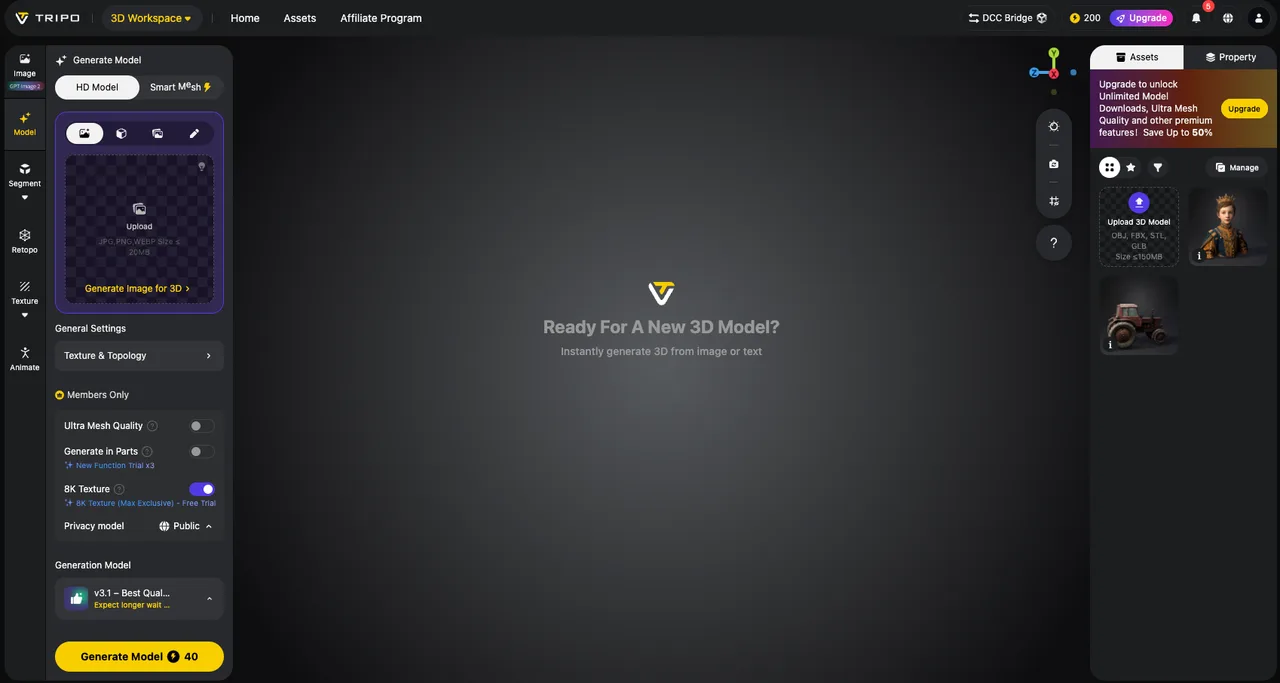
AI 3D workspace by VAST that generates textured, riggable models from text, images or sketches in seconds.
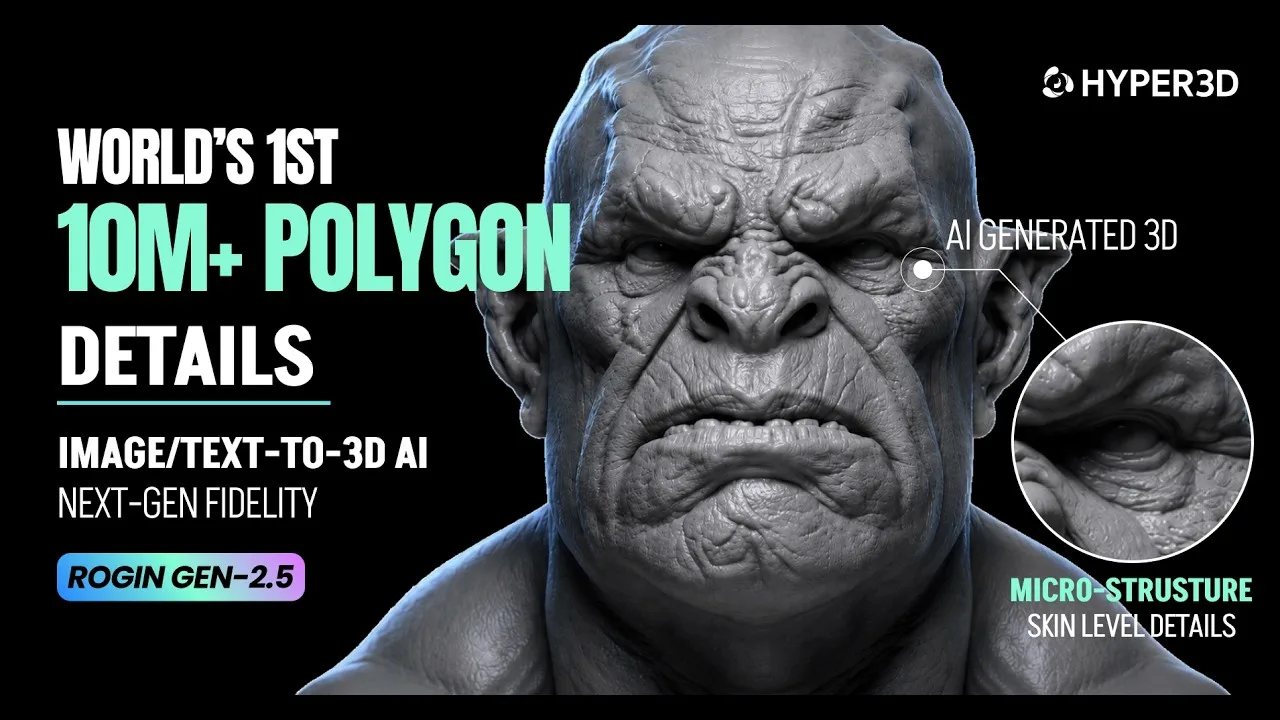
Deemos' AI 3D generator focused on high resolution quad geometry and PBR textures from text or multi image input.
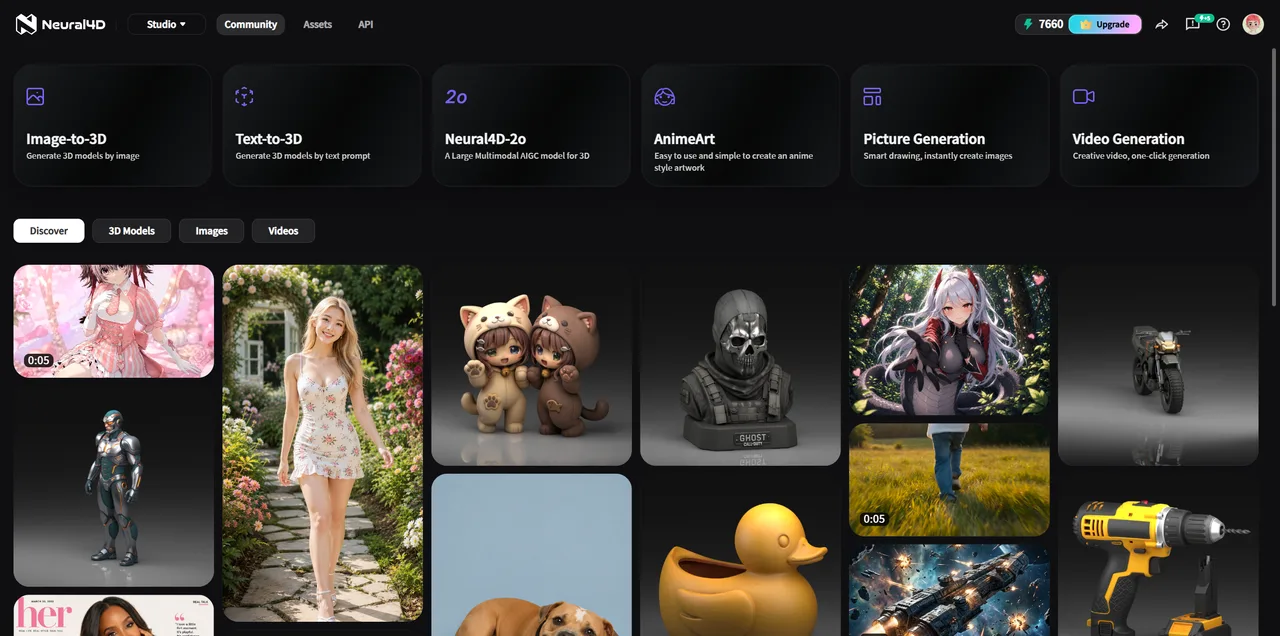
Text, image and sketch to 3D generator with a free tier, mesh quality presets, part splitting and export aimed at both game engines and 3D printing.