CAD Exchanger
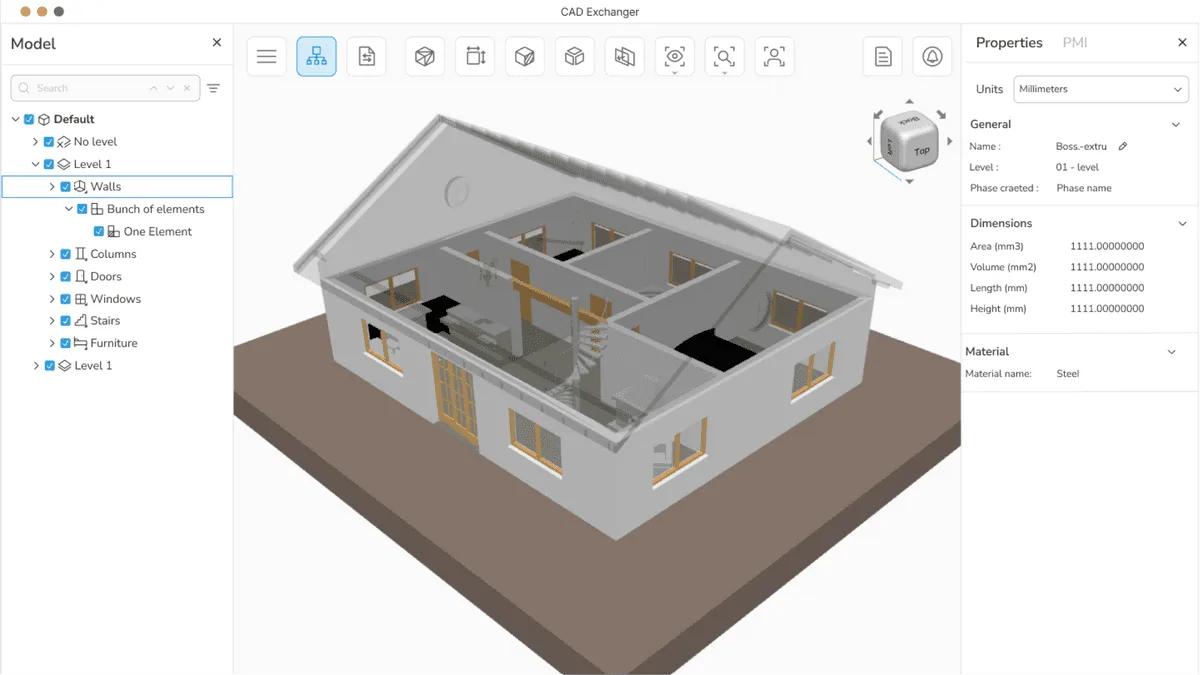
Desktop app and SDK that read, heal and convert over 30 CAD and mesh formats. A translator, not an authoring tool.
Free, open source browser viewer that opens STEP, STL, OBJ, glTF and 15 more formats locally, with nothing uploaded to any server.
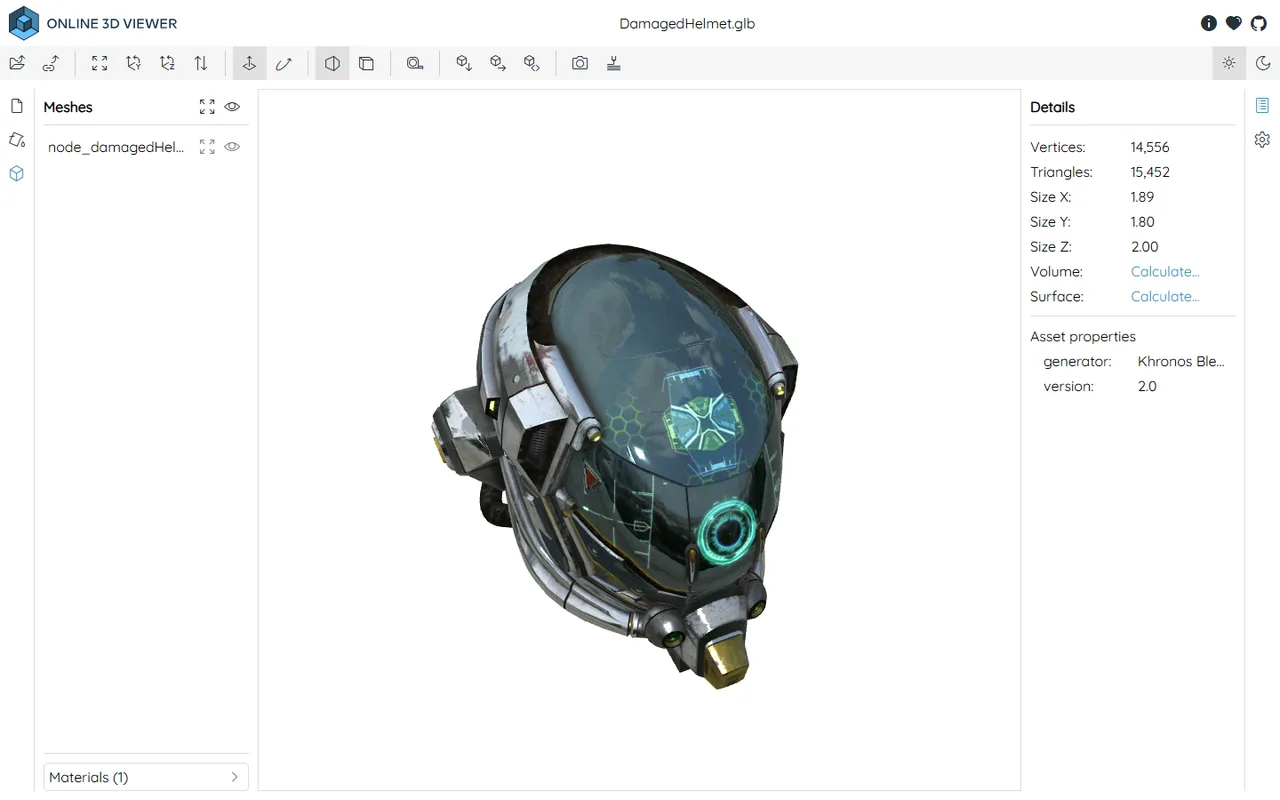
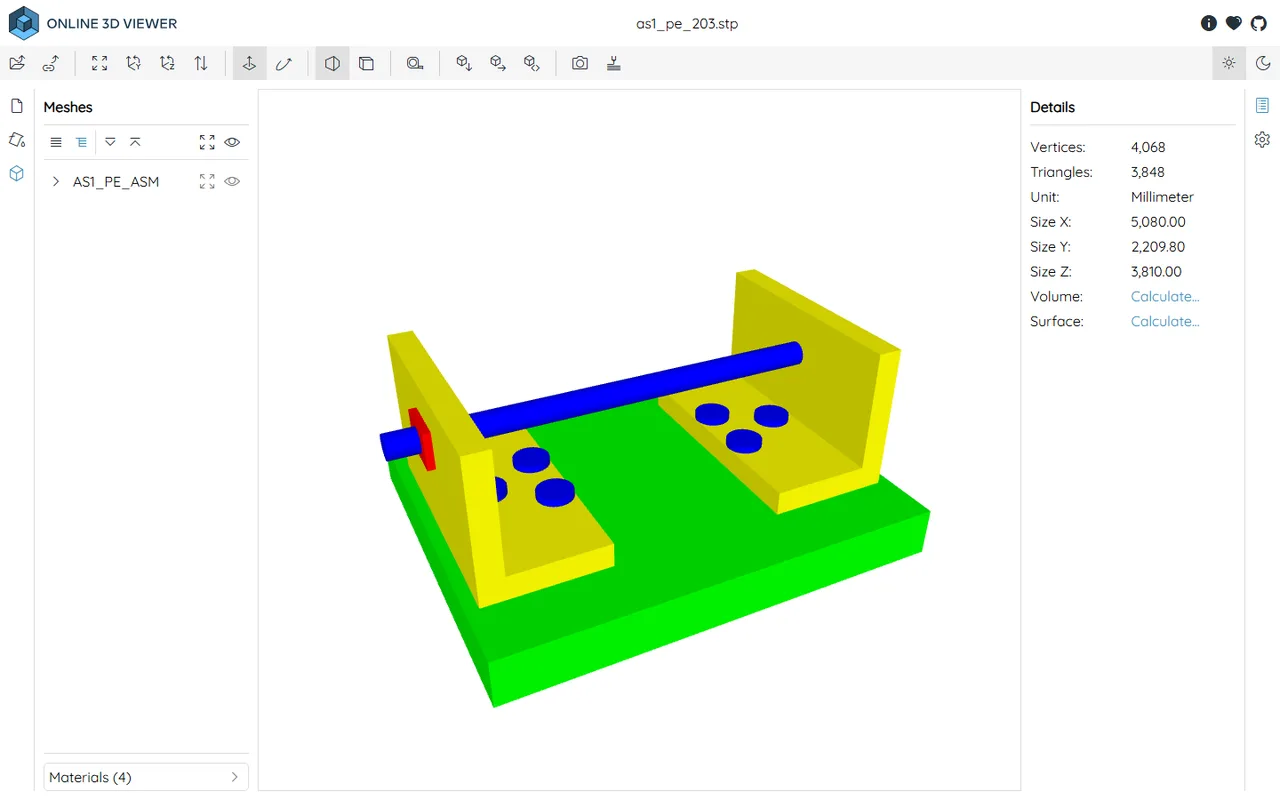
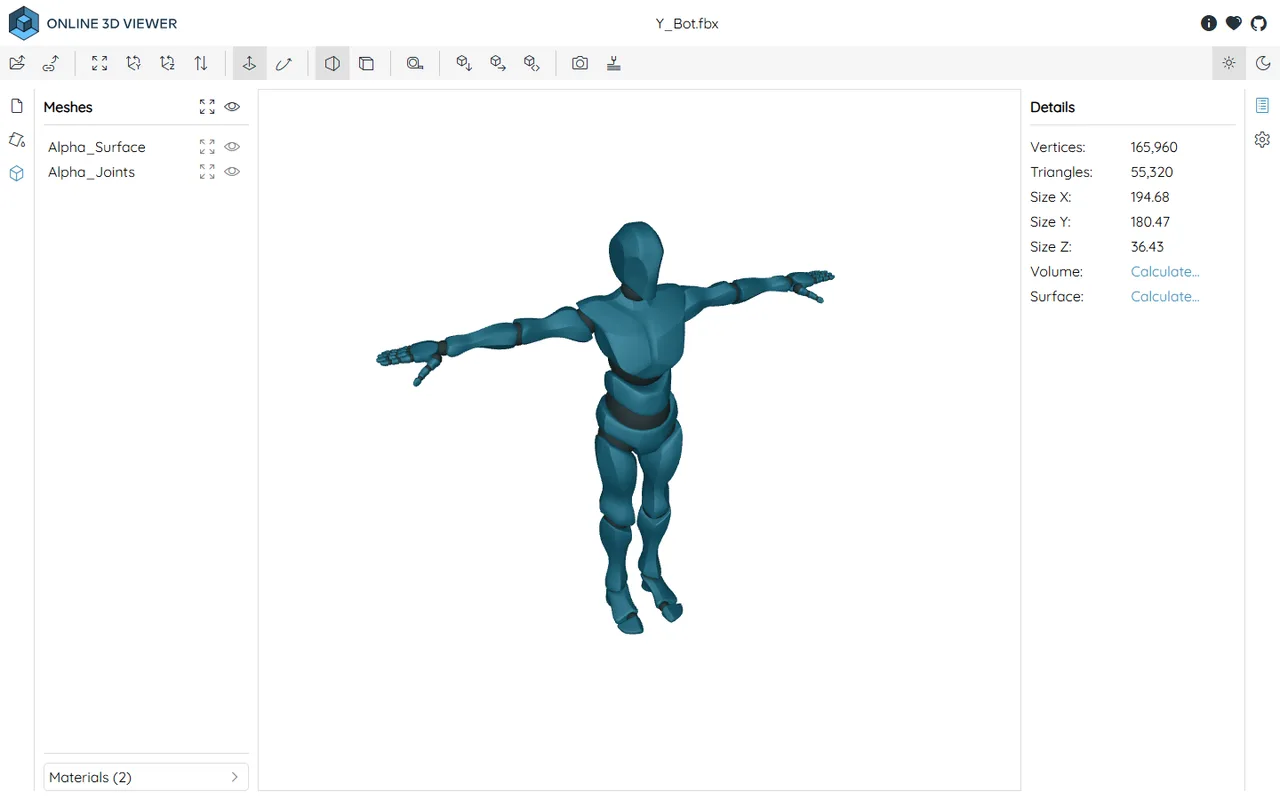
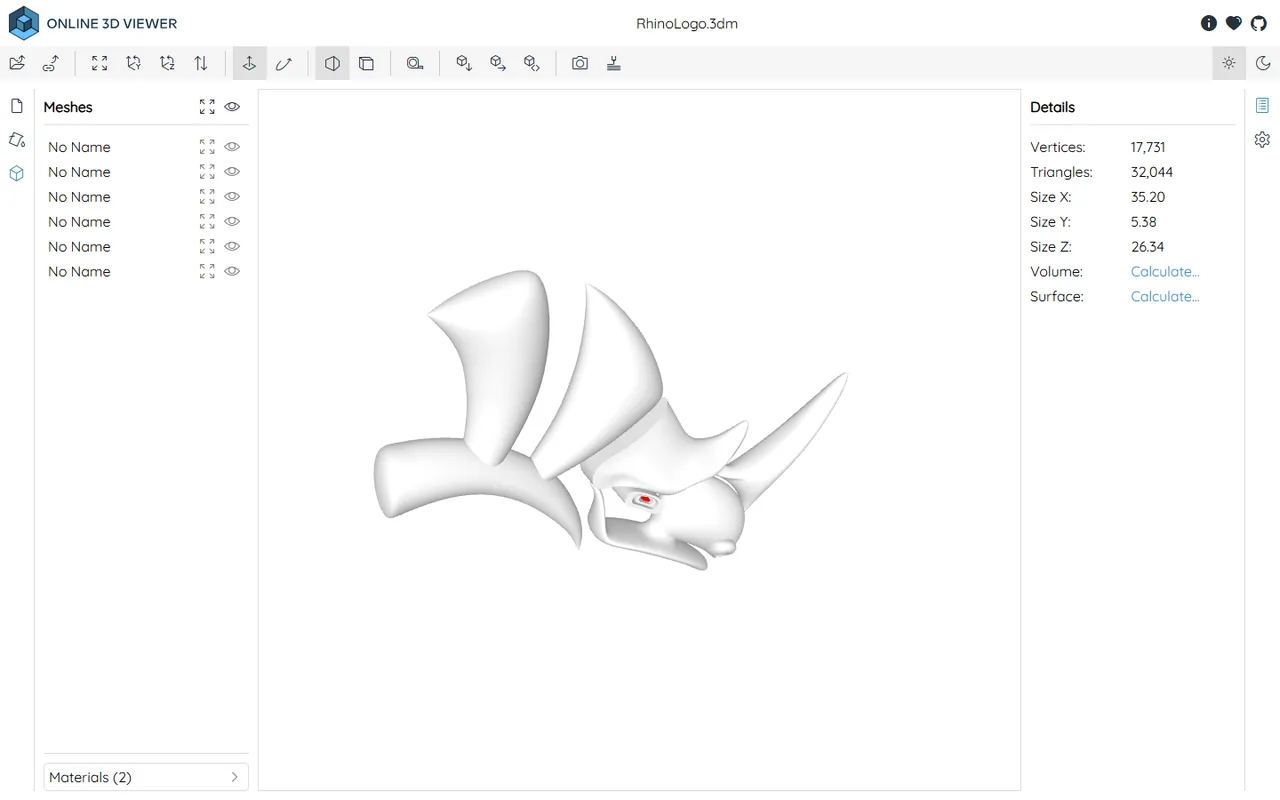
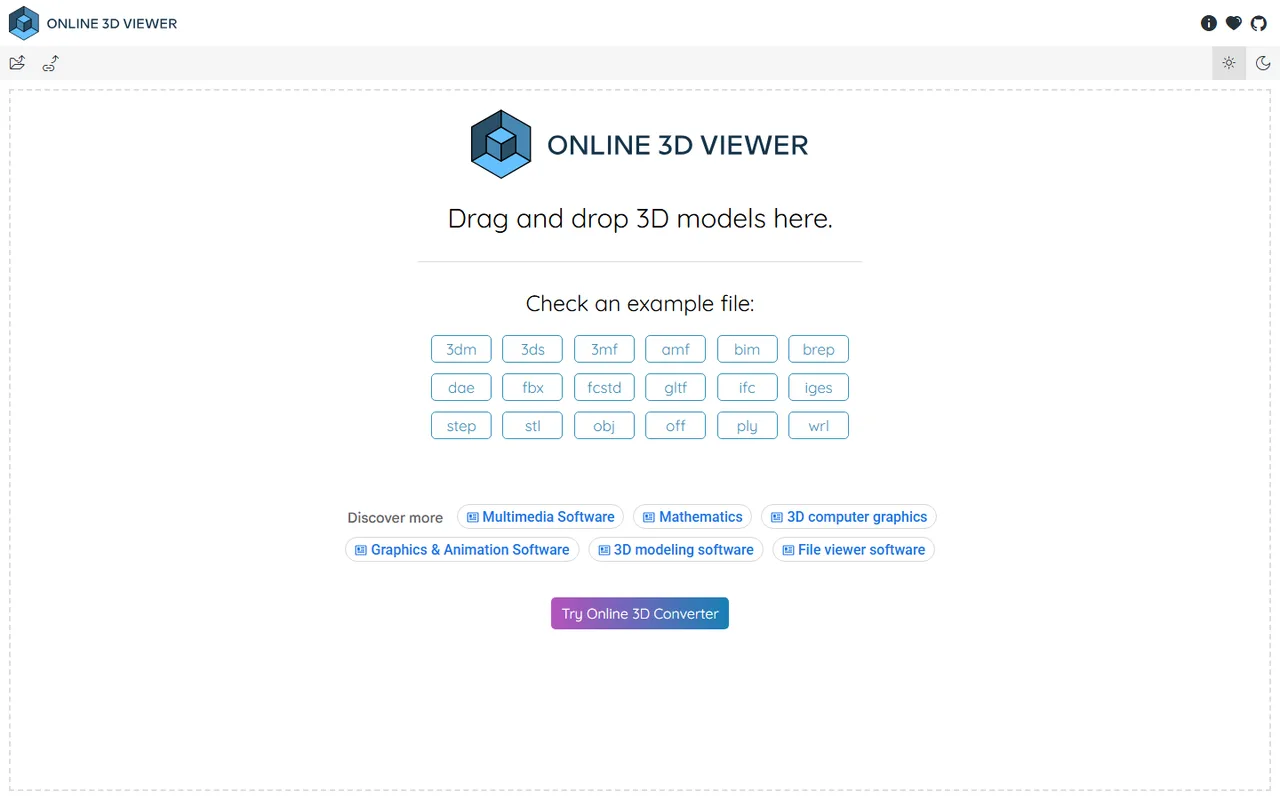
Online 3D Viewer, best known through its public instance at 3dviewer.net, is an open source browser viewer built by Hungarian developer Viktor Kovacs. It does two jobs: a zero install site where anyone can drop a model and inspect it, and an embeddable JavaScript engine that powers 3D preview inside Gitea, a WordPress plugin active on over 9,000 sites, the Orthanc medical imaging project and an Obsidian plugin. Its defining trick is parsing engineering CAD formats (STEP, IGES, BREP) directly in the browser through a WebAssembly build of OpenCascade, something that used to require desktop software or server side conversion. Just as distinctive is its privacy model: files are read locally by the browser and never uploaded anywhere, which makes it safe for NDA bound work. The core is MIT licensed and entirely free, funded by donations.
A WebAssembly build of the OpenCascade CAD kernel (occt-import-js) tessellates mathematical B-Rep geometry into WebGL meshes on your own CPU. Engineering formats open in seconds with no server side conversion.
Files are read by the browser's FileReader API in local memory and never leave your machine. That satisfies NDA and data governance rules that rule out cloud viewers for unreleased designs.
Reads everything from STL, OBJ and glTF to FreeCAD, Rhino, IFC and dotbim files, and exports to eight formats, so it doubles as a free format converter.
Imported parts keep their original hierarchy instead of being merged. Expand the tree, isolate or hide components, and read triangle counts, bounding boxes and material properties per part.
A slider driven explode view (added October 2025) separates assembly components for inspection, and the details panel computes dimensions, volume and surface area.
The same MIT licensed engine embeds in any site or app. It ships inside Gitea's file preview, a 9,000+ install WordPress plugin, Orthanc medical imaging and an Obsidian plugin.
Recurring themes across third-party user reviews (G2, Capterra, TrustRadius).
Online 3D Viewer is free and open source. There is no paid edition to upgrade to, and no feature is held back behind a licence.
| Plan | Price | What you get |
|---|---|---|
| Everything | Free forever | The site and the engine are MIT licensed open source with no tiers, accounts or usage limits. Development is funded by donations on Patreon, Open Collective and PayPal. |
| For integrators | Free (license note) | The core is MIT, but the occt-import-js dependency that powers STEP/IGES/BREP parsing is LGPL-2.1, which commercial products bundling it must comply with. |
The fastest way to sanity check an STL or 3MF before slicing: drag, inspect dimensions and normals, done. No account, no install.
STEP and IGES files open directly in the browser with assembly trees and millimetre dimensions, no seat of desktop CAD required.
Because parsing happens locally and nothing uploads, it is one of the few web viewers usable for unreleased or export controlled designs.
The MIT engine drops into product pages, wikis and internal tools without licensing fees, with a track record inside Gitea and WordPress.
There is no cloud backend, so there is no share button. Linking a model means hosting the file yourself on CORS friendly storage, which defeats non technical collaborators.
Parsing happens in browser memory, so very large assemblies (roughly 100 MB+ STEP files) can stall or crash the tab, especially on laptops and phones.
Rendering is functional rather than glamorous. For marketing grade lighting, AR viewing and hosted galleries, platforms like Sketchfab fit better.
Yes. Despite the name, files are parsed locally by your browser using the FileReader API and are never transmitted to any server. The geometry stays in your machine's memory.
An .obj file only stores geometry. Colors and textures live in the companion .mtl file and image files, so you must drag the .obj, the .mtl and all texture images into the window together.
Loading by URL requires the hosting server to allow cross origin (CORS) requests. Google Drive and standard Dropbox links block them, so URL loading needs CORS friendly hosting like GitHub raw links or a properly configured S3 bucket.
It bundles occt-import-js, a WebAssembly compilation of the OpenCascade CAD kernel. Your own CPU tessellates the mathematical B-Rep surfaces into triangles the browser can render.
No. It is strictly a viewer and converter: you can inspect, hide parts, measure bounding boxes and export to another format, but there are no modeling, repair or sculpting tools.
Yes. The engine is MIT licensed, free for commercial use. One nuance: the STEP/IGES/BREP parser dependency is LGPL-2.1, so products bundling that module need to follow its linking terms.
Desktop app and SDK that read, heal and convert over 30 CAD and mesh formats. A translator, not an authoring tool.
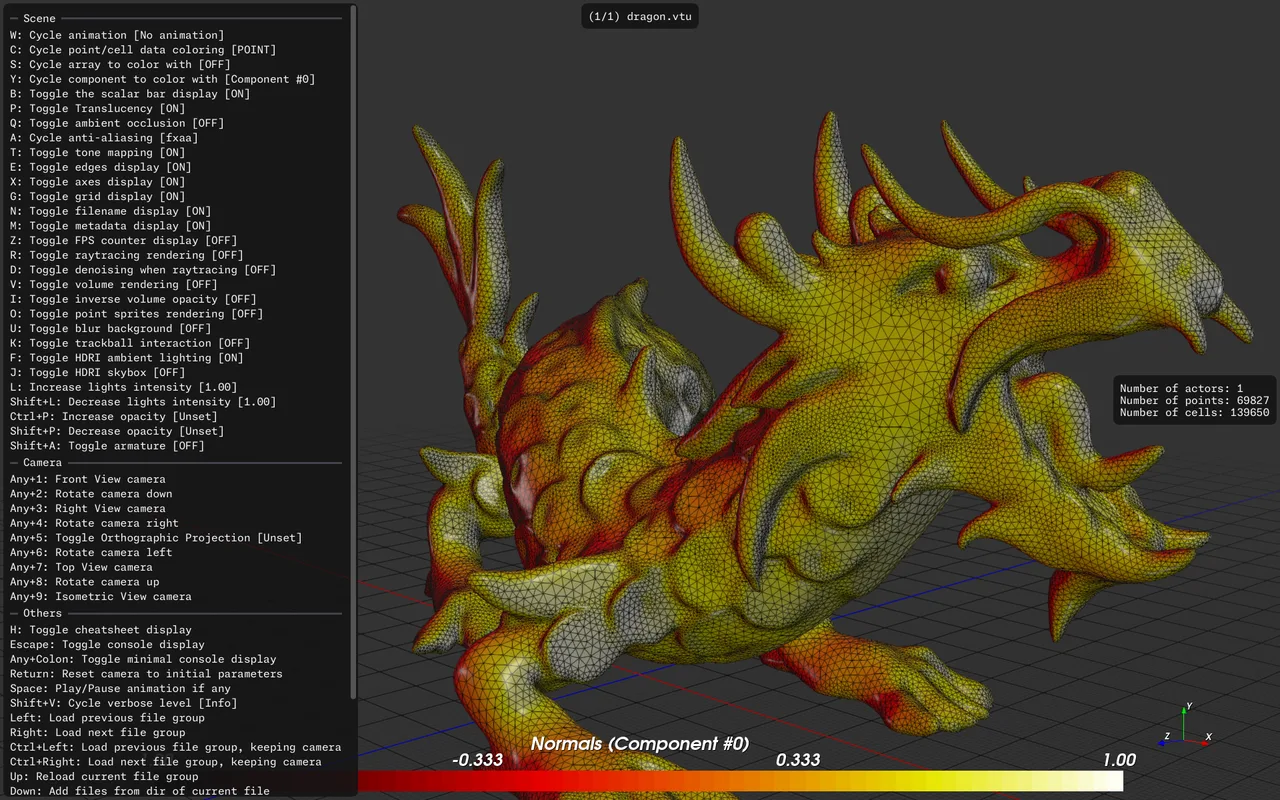
A fast, minimalist 3D viewer with no menus. Command line, hotkeys and file manager thumbnails, reading over 30 formats.
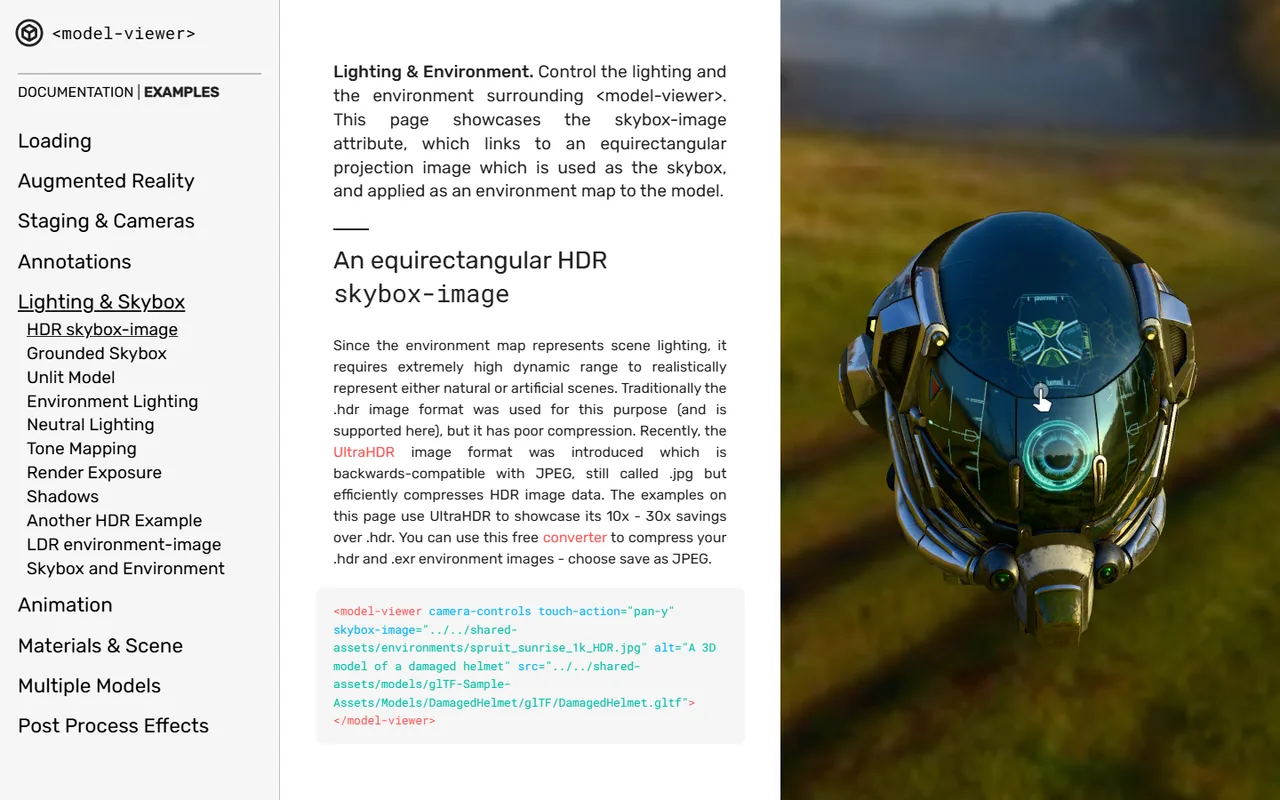
A web component that puts an interactive glTF model and an AR button on a page with one HTML tag. Reads glTF and GLB only.
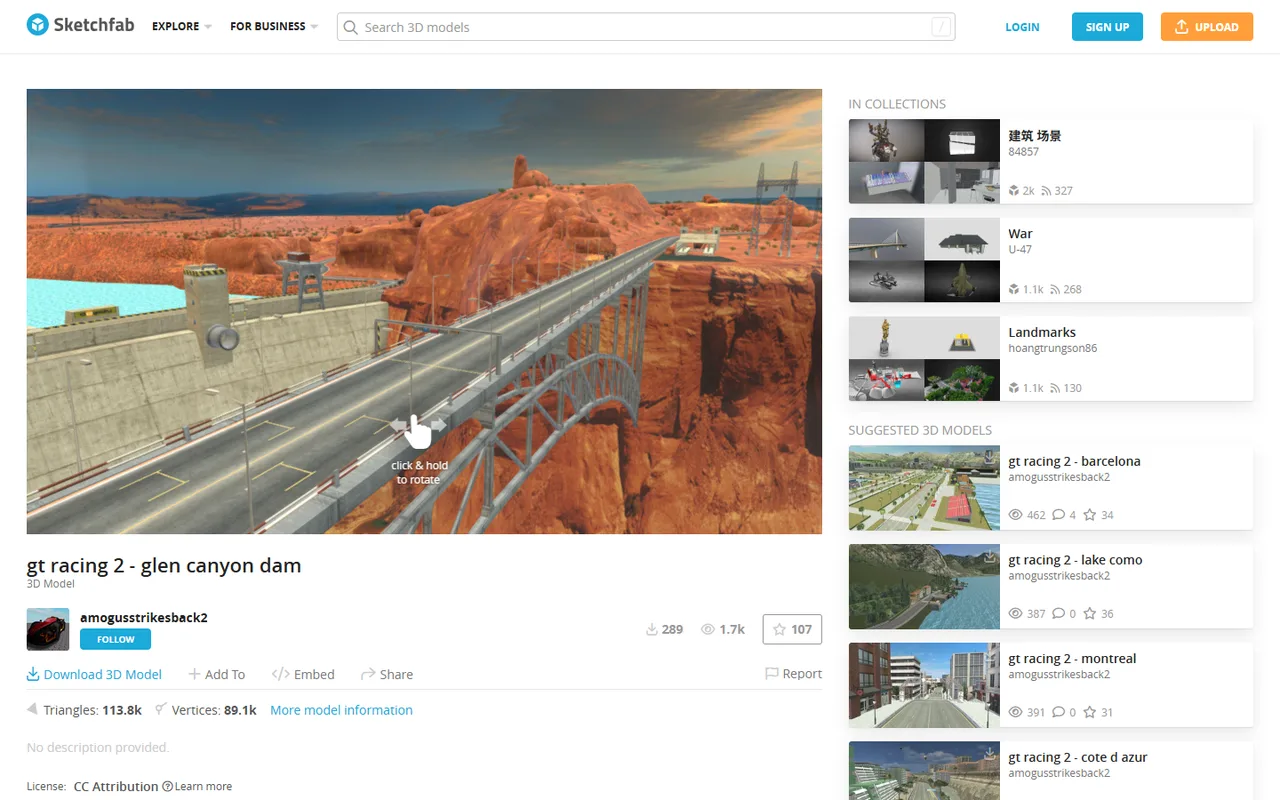
The web's default 3D portfolio and embeddable viewer. Its store closed in 2024 and the platform changed hands again in 2026.