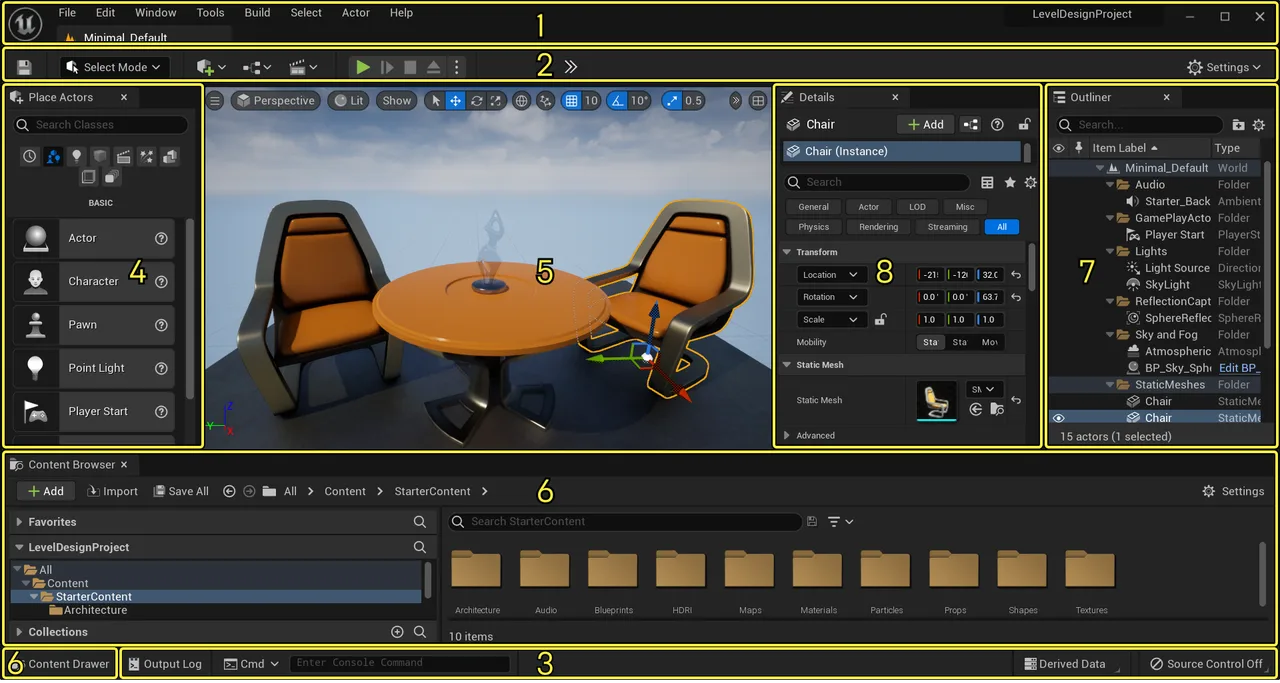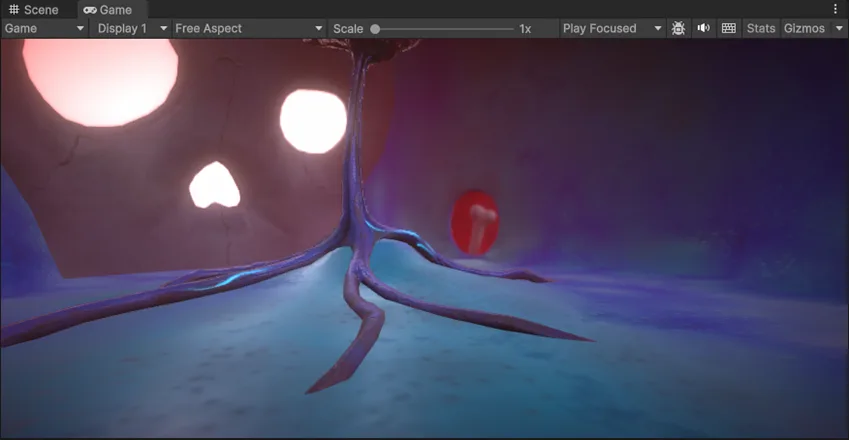
Unity
Cross-platform real-time engine for games, XR and industrial applications, with C# scripting and deployment to console, mobile and web.
MIT-licensed open source engine with a node and scene architecture, a purpose-built 2D pipeline and a Vulkan Forward+ 3D renderer.
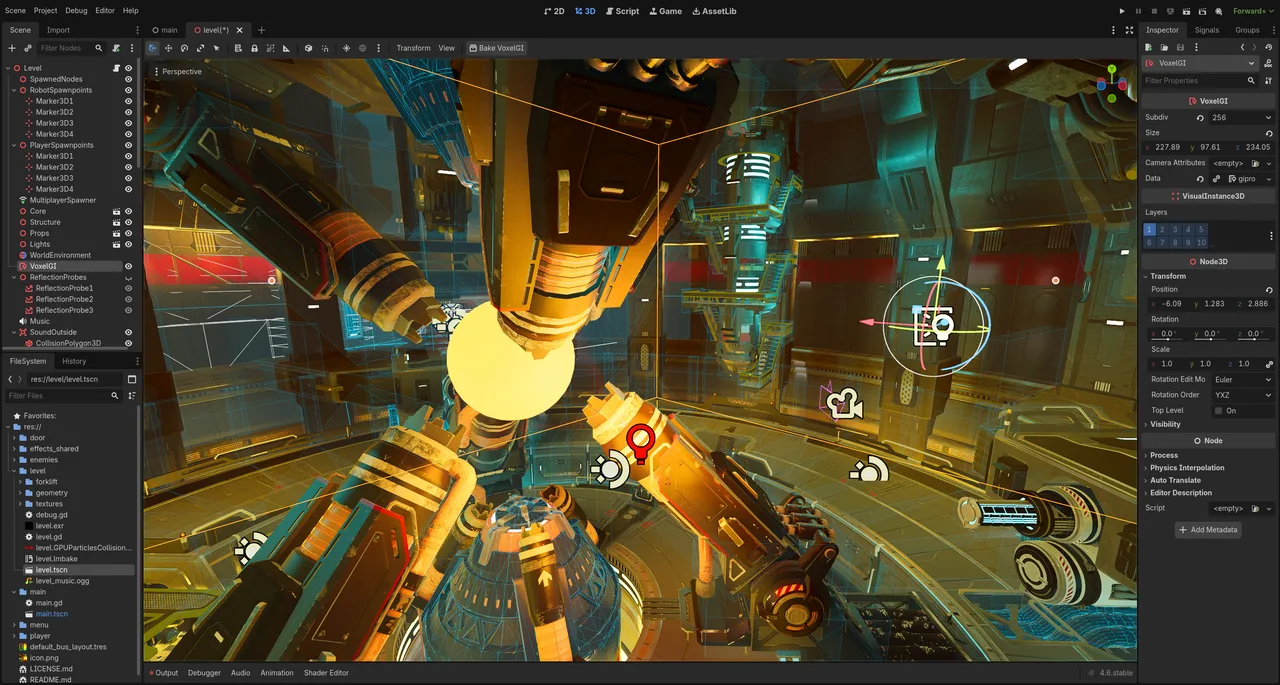
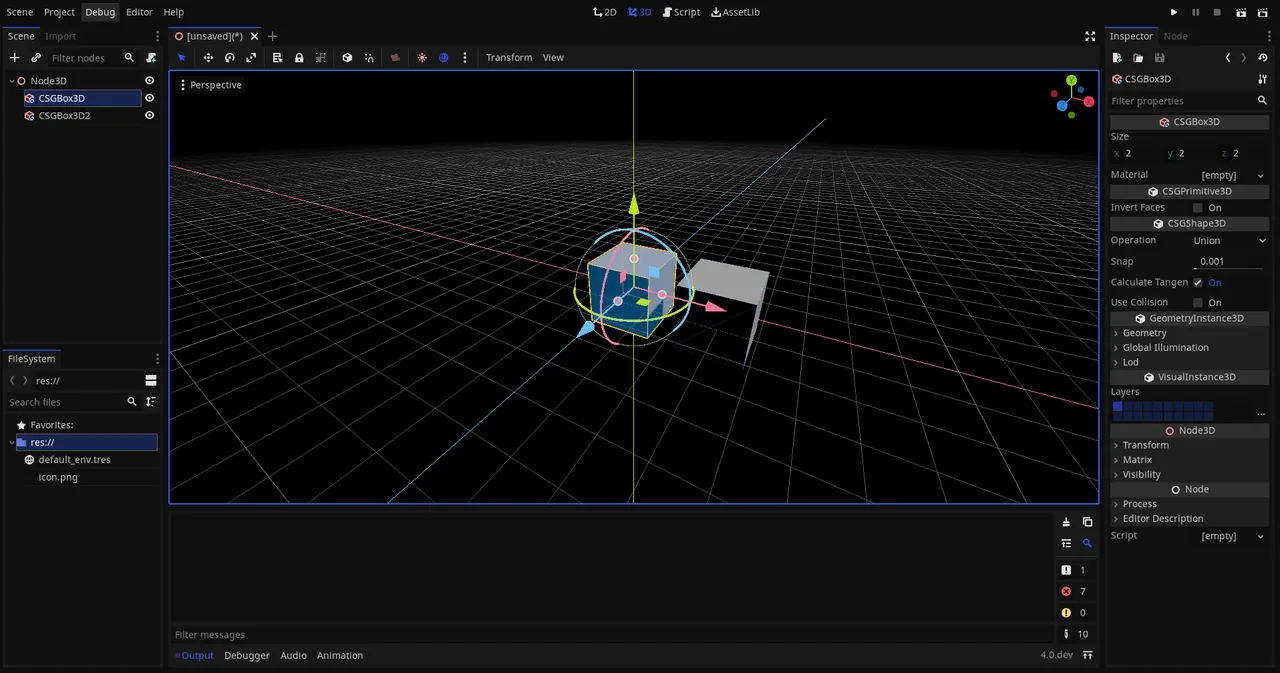
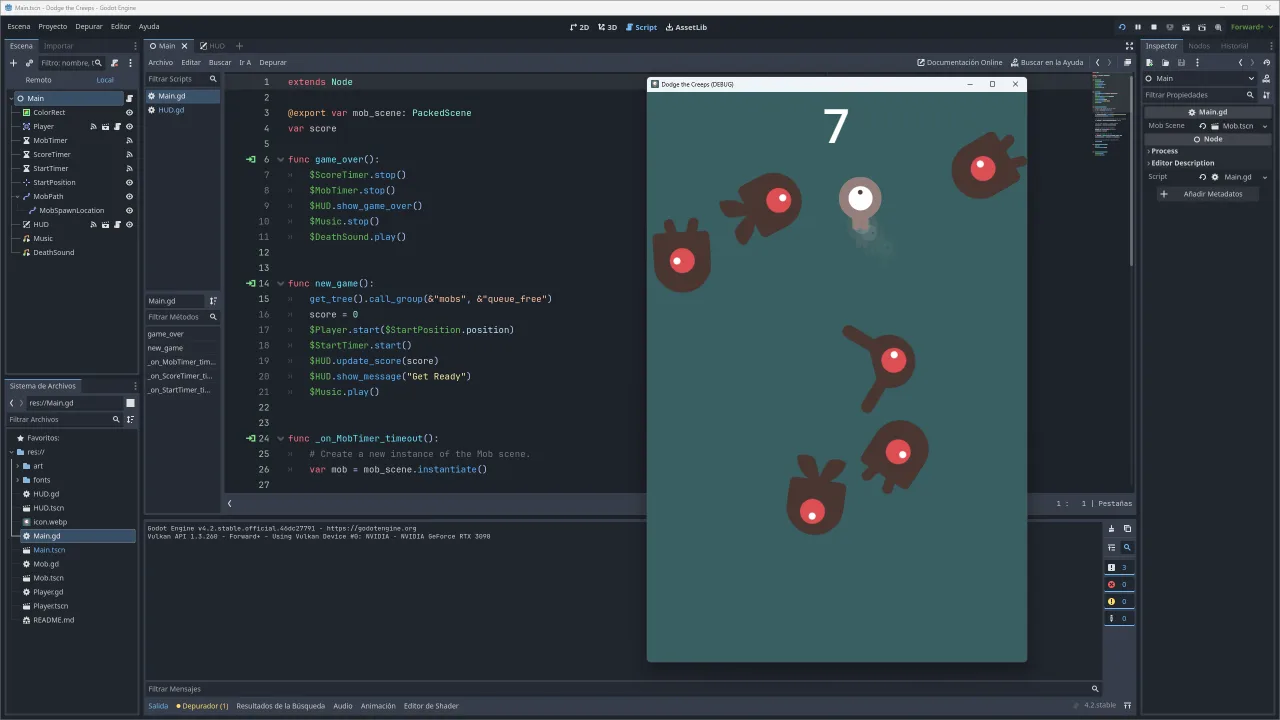
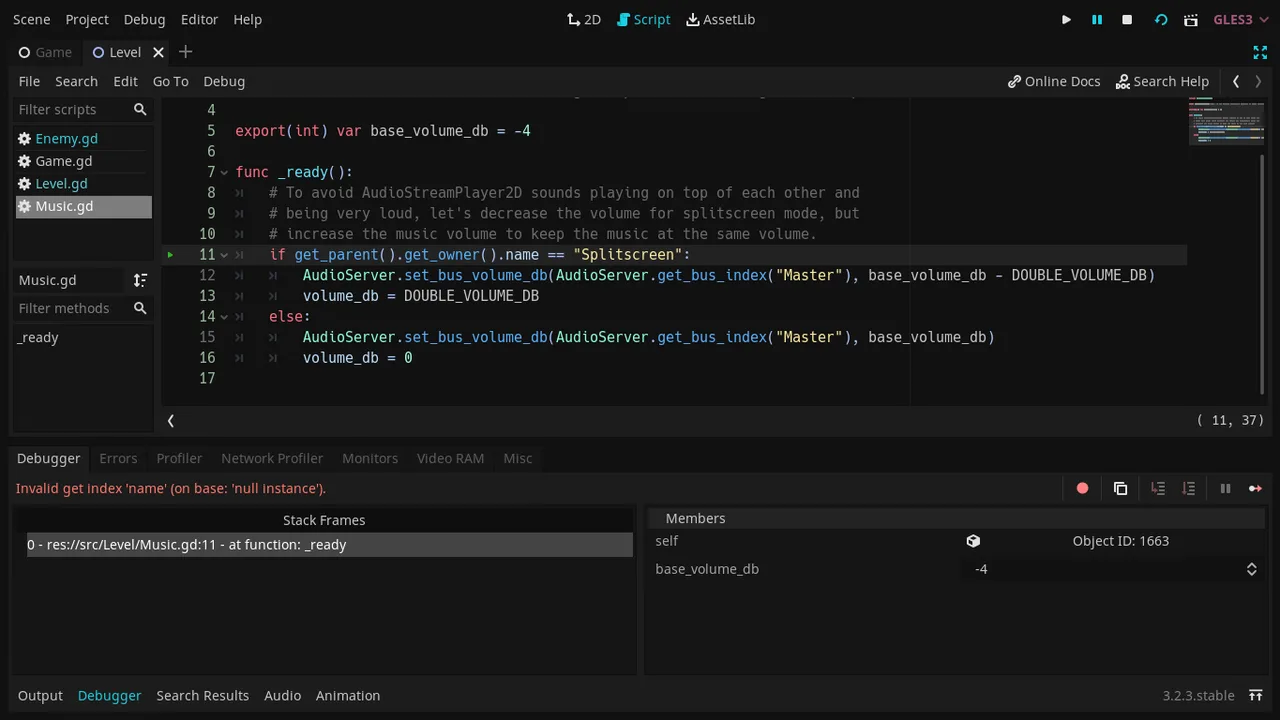
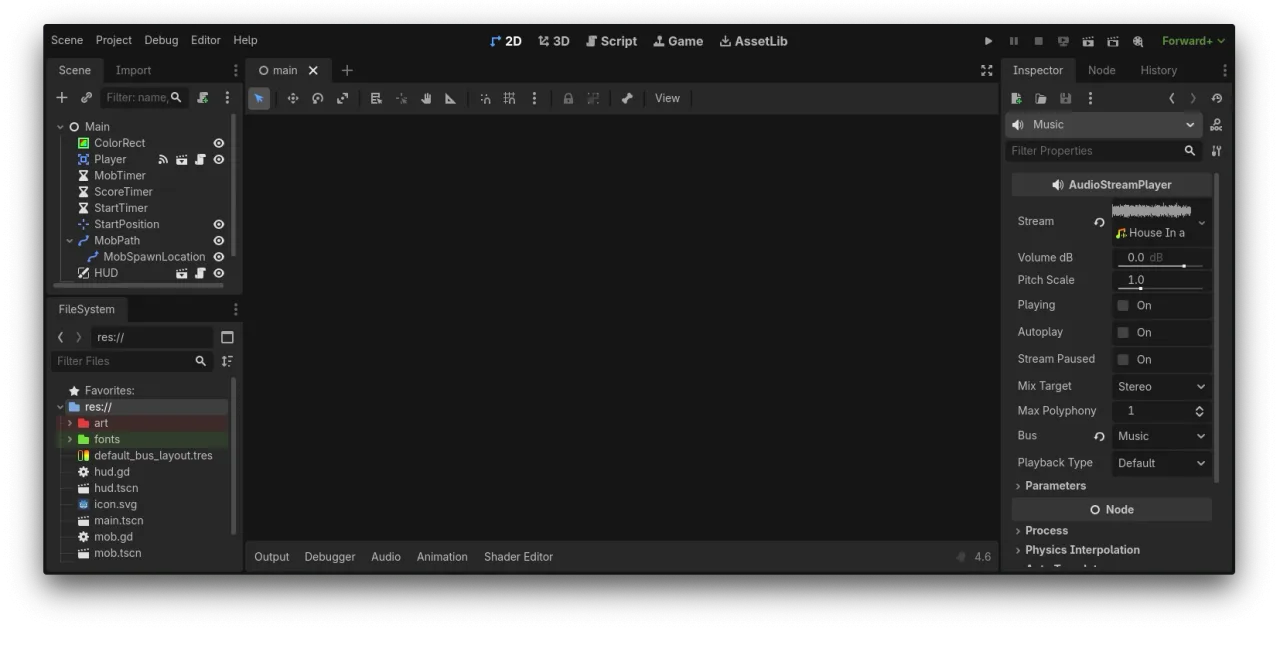
Godot began as an in-house tool at OKAM Studio, built by Juan Linietsky and Ariel Manzur, and was released under the MIT licence in February 2014. It is now maintained by the non-profit Godot Foundation. Everything in it is a node, nodes compose into scenes, and scenes nest inside other scenes, which pushes projects toward modular design without a separate component framework. The editor is roughly 120MB and starts in seconds, and it is built from the same UI nodes developers use for game menus, so extending it needs no separate API. The current stable release is 4.7.1 from 14 July 2026. The old view that Godot is a 2D engine dates from the 3.x era: 4.x ships a Vulkan Forward+ clustered renderer with dynamic global illumination, and version 4.6 replaced the internal 3D physics with Jolt as the default for new projects. It still trails Unreal on cinematic photorealism and asset-heavy open worlds, and consoles remain its real constraint.
Every element, from a collision shape to a UI container, is a node in a tree, and any tree can be saved as a scene and instanced inside another. Developers who get past the initial adjustment consistently describe it as more intuitive for modular design than attaching components to empty objects.
GDScript is a Python-inspired language bound tightly to the C++ core, so gameplay edits run immediately with no compile step. This is the most cited reason developers choose Godot over Unity or Unreal. C# is a first-class alternative through .NET 8, with NuGet packages and standard Microsoft tooling.
Godot 4.6, released January 2026, made Jolt Physics the default 3D engine for new projects, replacing GodotPhysics3D. This closed out long-standing complaints about rigid body stability, inverse kinematics and raycasting efficiency, and is the single biggest reason older assessments of Godot's 3D readiness are out of date.
The desktop default is a Vulkan Forward+ clustered renderer handling large numbers of dynamic lights, with signed distance field global illumination for real-time bounce lighting and no lightmap baking. A Vulkan Mobile backend and an OpenGL3 compatibility renderer cover weaker hardware and web targets.
Saving a .blend file into the project folder is enough: Godot calls the local Blender executable through the CLI, has it emit glTF, and ingests the result. Convenient, but it does mean Blender must be installed on every machine that opens the project, and unapplied transforms in Blender will confuse the physics engine.
Rather than projecting sprites onto a plane inside a 3D renderer, Godot ships a dedicated 2D engine with pixel-perfect coordinates, 2D-specific physics interpolation and native tilemaps. This is the clearest technical advantage it holds over both commercial competitors.
Recurring themes across third-party user reviews (G2, Capterra, TrustRadius).
Godot Engine is free and open source. There is no paid edition to upgrade to, and no feature is held back behind a licence.
| Plan | Price | What you get |
|---|---|---|
| Godot Engine | Free forever | MIT licence: no seat fees, no revenue share, no royalties at any revenue level, and no obligation to display a splash screen. Source modification and sublicensing are permitted. Funded by donations and sponsorships through the Godot Development Fund. |
A 120MB editor that opens in seconds and a scripting language with no compile step make the iteration loop shorter than anything else in this category.
The dedicated 2D pipeline is purpose-built rather than retrofitted, which shows up in pixel-perfect rendering and tilemap handling that competitors approximate.
MIT means terms cannot be changed retroactively on you. A studio making USD 50 million owes the foundation nothing, which is why the 2023 Unity pricing episode moved so many projects here.
Full C++ source access with no restrictions makes it viable as a base for data visualisation, simulation and architectural tools rather than only games.
There is no equivalent to Nanite or Lumen. The renderer is strong for stylised and mid-tier realistic work, but it is not built to stream film-quality micro-geometry at scale.
Being open source, Godot cannot ship the proprietary Nintendo, Sony and Microsoft SDKs. Console deployment means third-party middleware such as W4 Games, or building the port yourself in C++.
Studio leads repeatedly raise the same problem: the pool of experienced Godot engineers is far smaller than the Unity pool, so scaling a team quickly is harder.
Yes. The MIT licence carries no upfront fee, no subscription, no royalty and no revenue threshold. A studio earning tens of millions owes the Godot Foundation nothing, and there is no obligation to show a Godot splash screen. Source code may be modified and sublicensed freely.
The engine itself is genuinely free; consoles are where money appears. Because the project cannot distribute proprietary platform SDKs, console builds go through middleware. W4 Games, founded by core Godot contributors, publishes tiered pricing: their Starter tier covers up to 8 users at around USD 800 per year for one console platform and USD 2,000 for all three, with a Pro tier for larger teams. Development kit hardware is a separate cost on top.
That view comes from the 3.x era. Godot 4 runs a Vulkan Forward+ clustered renderer with signed distance field global illumination, and version 4.6 made Jolt Physics the 3D default, which resolved the stability complaints. It will not match Unreal for photorealistic asset-heavy scenes, but for stylised, cel-shaded and mid-tier realistic 3D it is fully capable.
glTF. Native FBX import arrived through the ufbx importer in late 2024 and works, but the documentation and community both recommend glTF 2.0, which packages meshes, rigs, animation and PBR materials into one open payload with no version drift between Autodesk releases.
Almost always unapplied transforms. Godot uses a Y-up system where one unit is one metre. If a model was scaled in Blender without running Apply Scale, Godot reads the original vertex data and applies a multiplier on top, and Jolt then computes collision bounds against geometry that does not match what you see. Set Blender to metric and apply all transforms before saving.
Yes, and it is a first-class option rather than an afterthought. Godot integrates with .NET 8, so you can use NuGet packages and standard Microsoft profiling tools. Community documentation and tutorials still skew heavily toward GDScript, which is the main practical friction.
The project embeds no telemetry, so precise figures do not exist. Public proxies: roughly 2 million downloads per major stable release, over 102,000 GitHub stars, and game jam share rising from 19% of GMTK Game Jam submissions in 2023 to 37% in 2024, reaching rough parity with Unity by 2026.
Cross-platform real-time engine for games, XR and industrial applications, with C# scripting and deployment to console, mobile and web.
Epic's real-time 3D engine built around Nanite virtualised geometry and Lumen dynamic lighting, used for AAA games, virtual production and archviz.